Office-Friendly Hair Colour: Choose the Contrast, Not Just the Shade
“Something suitable for the office” is a useful intention, but it does not describe a single hair colour. Workplaces differ, and two brown hairstyles can look very different if one has fine, close-toned highlights and the other has a bold light panel at the front. To explain the look you want, discuss contrast and placement as well as the shade name.
Start with your actual workplace expectations
If your workplace has a written appearance policy, check it directly. Do not rely on a salon to decide what your employer permits. If the expectations are informal, think about the range of colours you feel comfortable wearing in meetings, on video calls and at client events. The goal is a personal brief, not a universal rule about professionalism.
Also decide how visible you want the change to be. “I want my hair to feel refreshed without becoming the first thing people notice” is different from “I want a clear change within a natural-looking colour range.” Both can be useful starting points.
Separate overall depth from highlight contrast
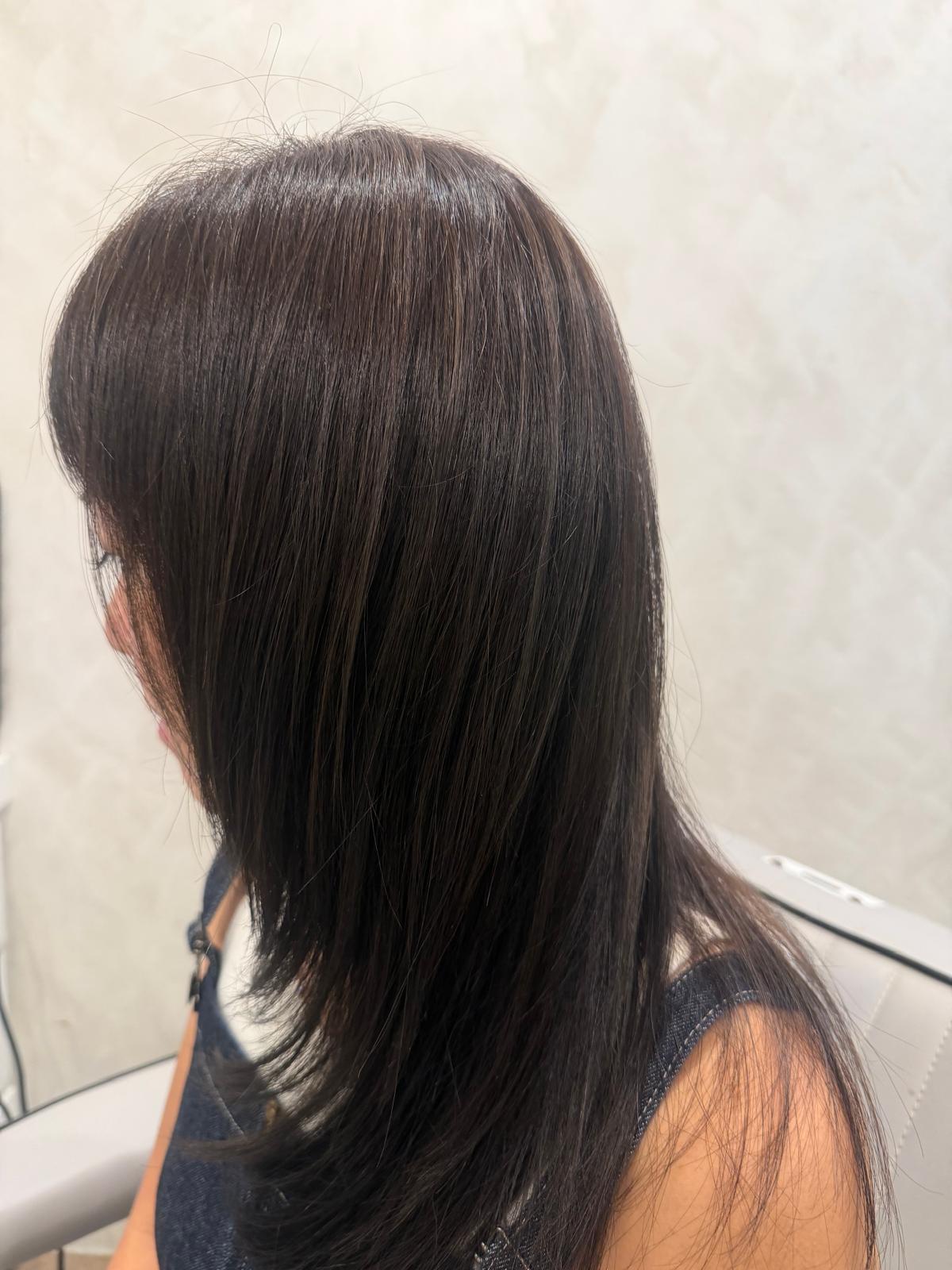
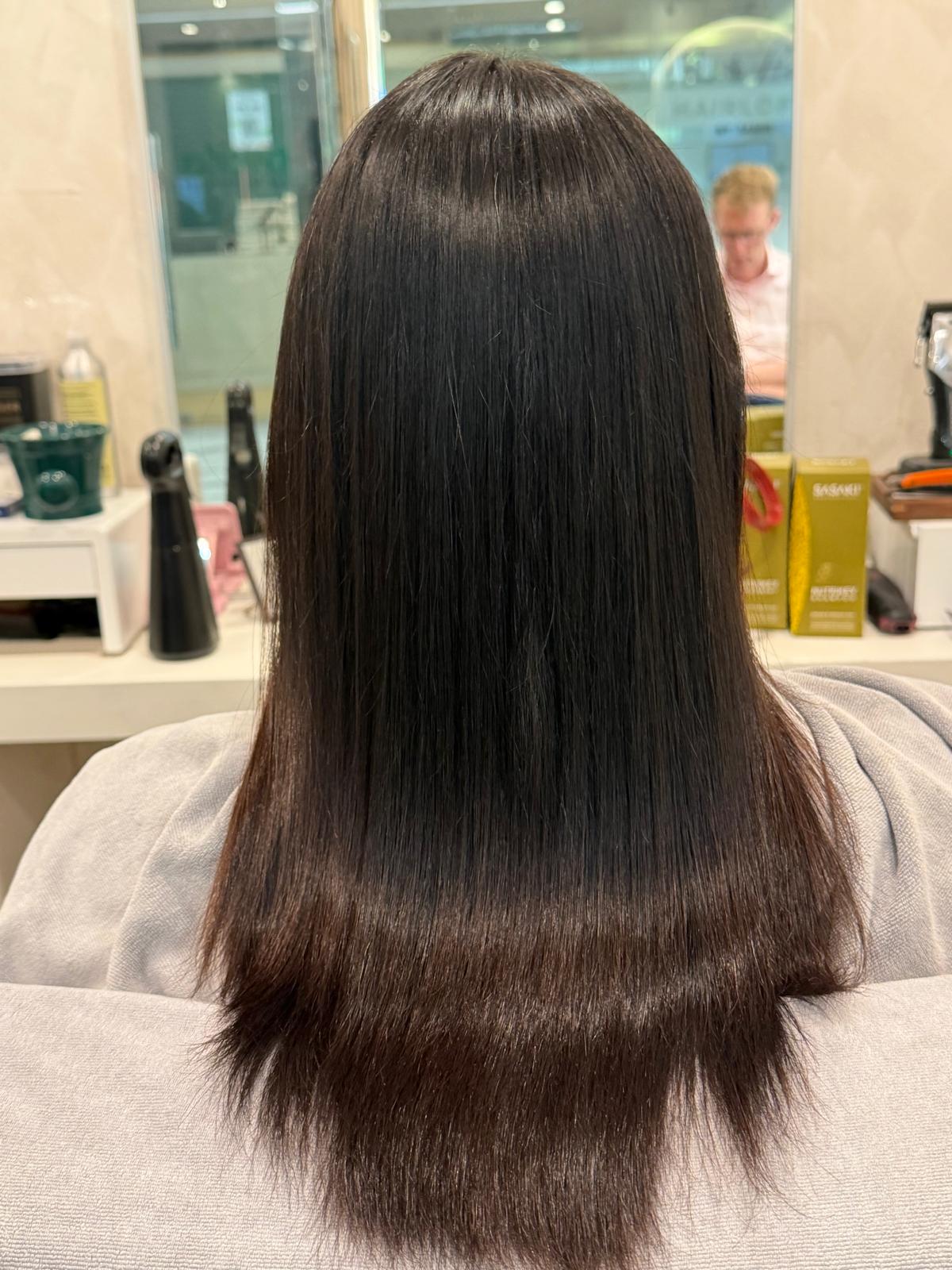
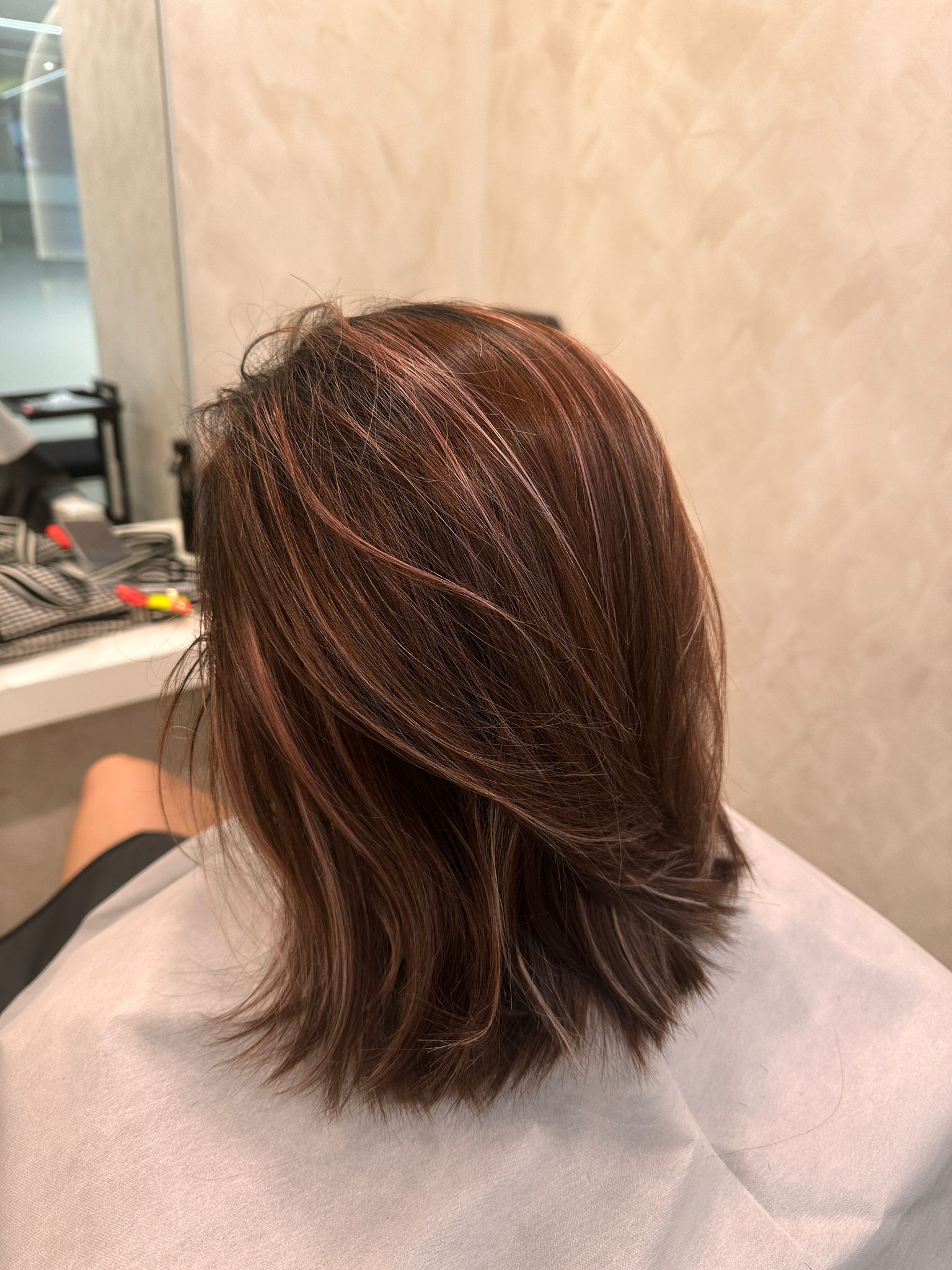
Overall depth describes how light or dark the hairstyle reads as a whole. Contrast describes how strongly individual sections differ from each other. You might prefer a lighter overall brown with little contrast, or a darker base with a few brighter accents. Neither choice can be captured fully by saying “brown highlights.”
- Lower contrast: look for references where the lighter and darker sections sit close together visually.
- Moderate contrast: find photographs with visible dimension that does not dominate the entire hairstyle.
- Stronger contrast: identify any bold pieces you like, then decide whether they fit your daily comfort level.
These descriptions are a way to compare images, not fixed technical categories or guarantees. Your stylist can translate the visual preference after assessing your base colour and previous services.
Check where the brightness sits
A bright section next to the face may be more noticeable during a conversation than lightness hidden underneath. Highlights around the parting may be visible on a video call, while colour in the lower lengths might be tucked into a bun. Bring your usual work hairstyle into the discussion.
Show how you wear your fringe and whether you regularly clip the front away. If you want an accent to remain discreet, ask how visible it may become when the hair moves or is tied up. Placement should work with your routine rather than depend on keeping every strand in one position.
Test the brief with a weekday example
Consider someone who wears their hair down on video calls and in a low ponytail for the commute. Their brief might be: “Keep the overall depth close to this brown, add fine dimension through the lengths, and avoid a bright block around my forehead.” That is more specific than “office balayage.”
Another person may welcome brighter front pieces but dislike visible regrowth at the parting. Their consultation should prioritise the transition near the roots as well as the face frame. Hairloft’s colour services page can help identify which service options to discuss without making the technique name the whole decision.
Include the weeks between appointments
Think about how the colour may look as roots become visible and the tone changes. Ask what maintenance would be relevant to the finish you prefer, and whether the look can be allowed to soften if you delay a visit. A colour that feels comfortable on appointment day should also fit your realistic upkeep schedule.
You can browse the Orchard salon menu before choosing the service to enquire about. Then contact Hairloft with current photos, an example of your preferred contrast and any workplace constraint. Those details make “subtle” a much more useful instruction.