Round Brush Size and Blow-Dry Finish: What to Ask Your Stylist
When a salon blow-dry looks different from your attempt at home, it is tempting to assume you simply need the same brush. Brush size matters, but it is only one part of the process. The length of the section, how it is held, the drying method and the finish you want all belong in the conversation.
Before buying another tool, show your stylist what you already use. Then describe the result in concrete terms: a gentle bend at the ends, a rounded fringe, a smoother outline or a more lifted-looking finish.
Start with the part of the hair you want to shape
A short front section and a long lower section give you different amounts of hair to work around a brush. A brush that feels manageable through the lengths may be awkward near a short fringe. This is one reason a single size may not feel equally useful everywhere.
As one example, ghd’s round-brush guidance places a 25 mm barrel with shorter styles, 35–45 mm barrels with mid-to-longer lengths, and a 55 mm barrel with long or extra-long hair. These are that manufacturer’s suggested uses. Treat them as a starting point, then consider the length of the section you want to shape and how comfortably you can handle the brush.
Show the bend you mean
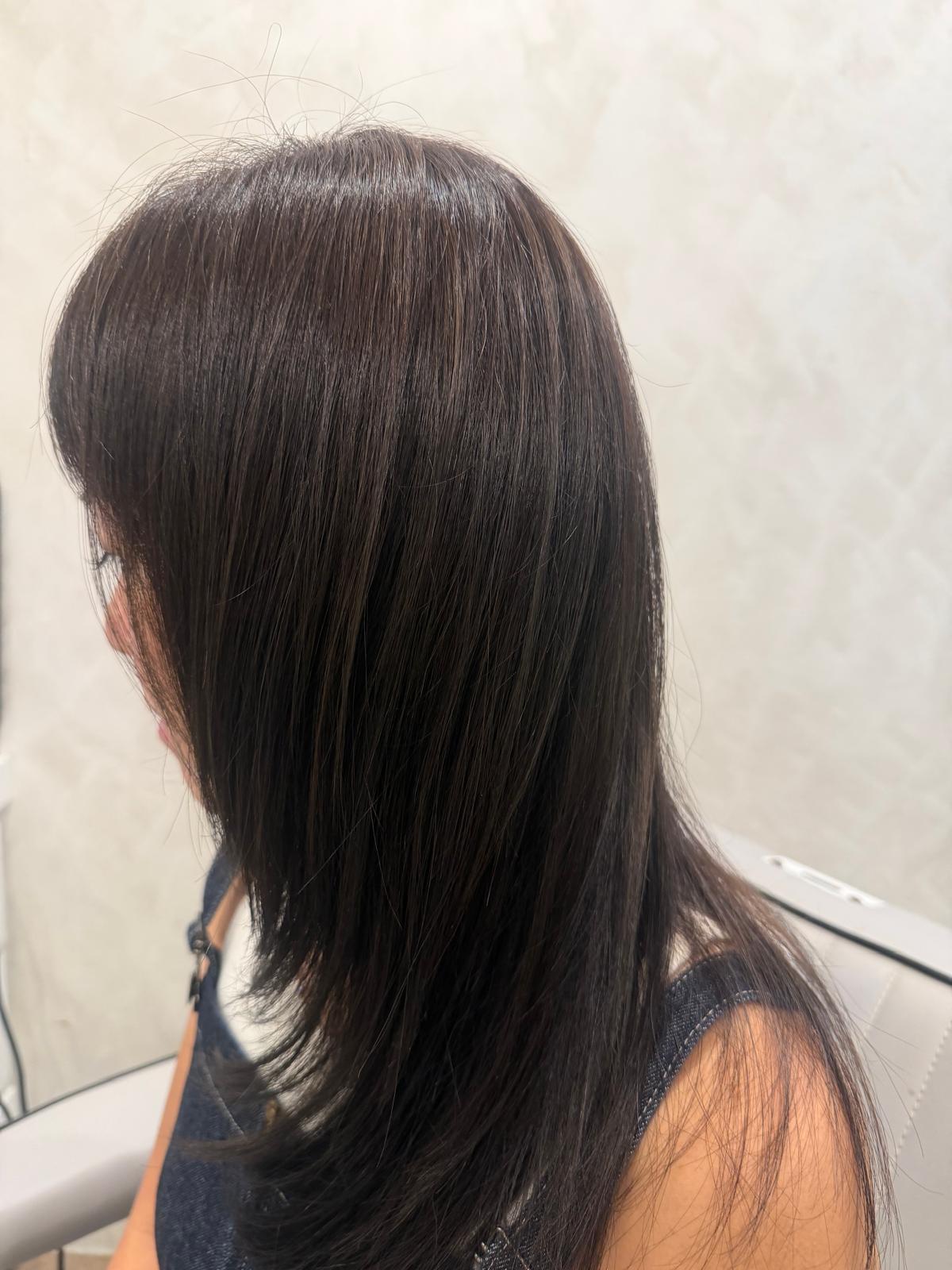
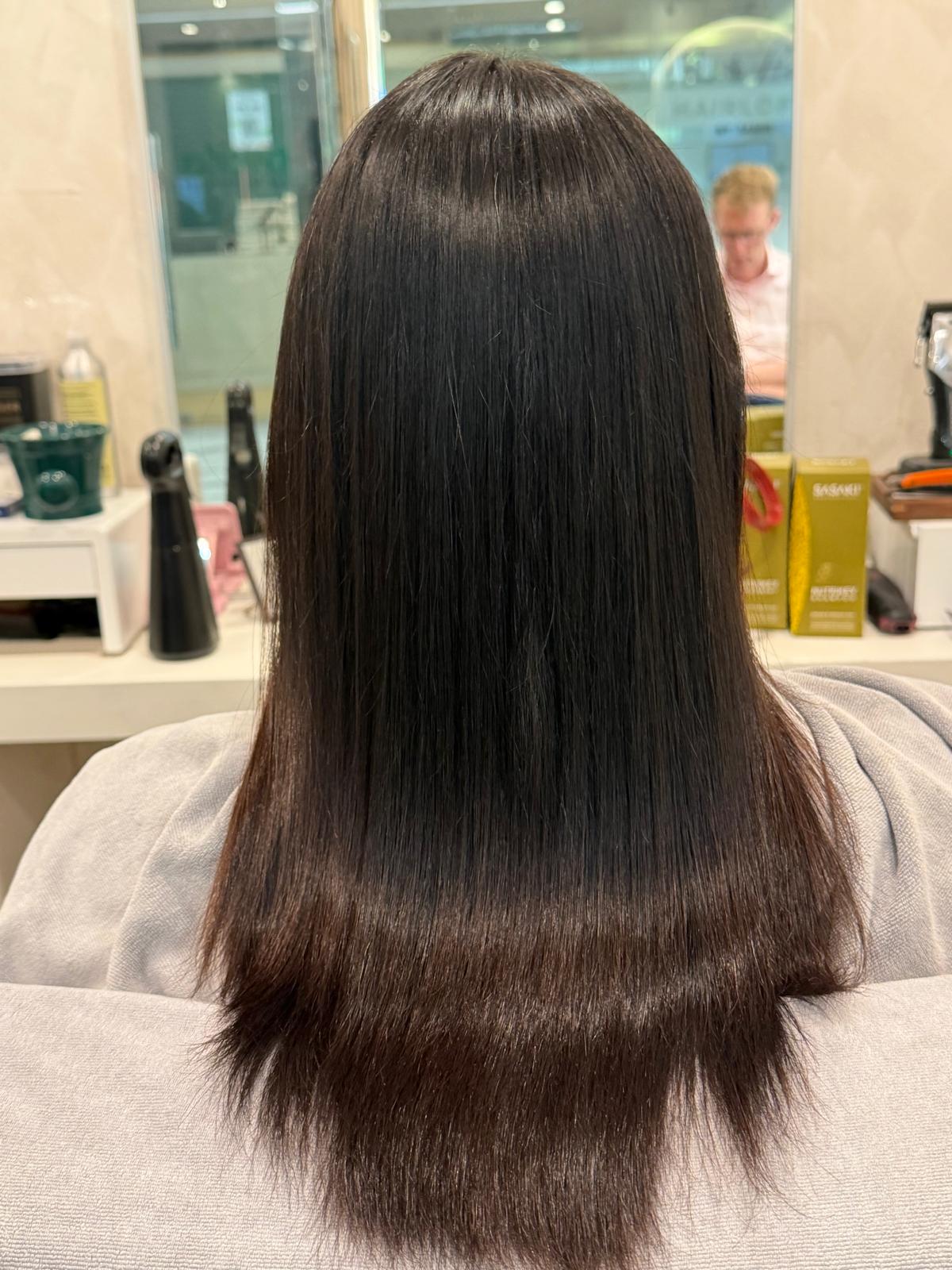
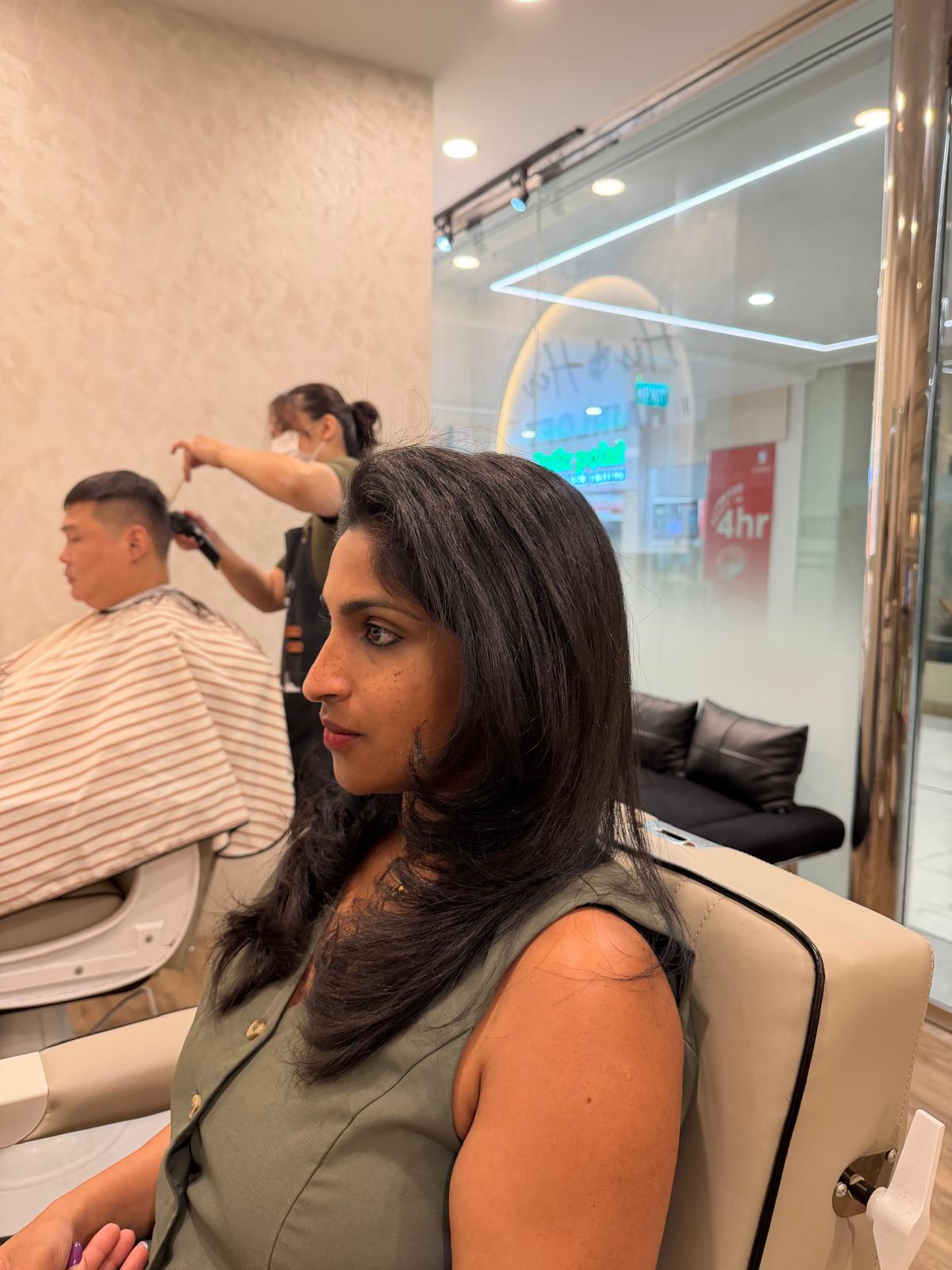
“A bouncy blow-dry” can mean a softly curved outline to one person and pronounced turned ends to another. Point to the exact part of a reference image that interests you. Is it the front lifting away from the face, the ends curving under, or the movement through the middle?
Ask the stylist which features come from the haircut and which are created by styling. A shorter layer may sit differently around the brush from the longest ends. Understanding that difference prevents a tool purchase from carrying expectations it cannot meet on its own.
Watch the sequence rather than only the tool
- How much hair is taken into one section?
- Where does the brush first contact that section?
- How is the brush moved without repeatedly catching?
- How does the stylist release the hair?
- Which parts could you simplify at home?
Ask for a slow demonstration of the section you struggle with most. You may need help with the front, the back or coordinating both hands. A technique performed easily by someone standing behind you can feel quite different when you do it yourself in a mirror.
Keep comfort and appliance instructions central
Use the dryer and any heated equipment according to the manufacturer’s directions. Do not keep winding hair around a brush if it is catching, or compensate for a difficult section by pulling harder. Pause and ask for a simpler approach if the process is uncomfortable.
A conventional brush used with a dryer is also different from an electrically heated brush. Instructions for one should not be assumed to apply to the other, particularly regarding whether hair should be damp or dry.
Keep a note of the finish you liked and the one section where you managed it successfully. Practise that section first on another day. Trying to reproduce every movement across your whole head immediately can make it harder to identify what is working. A simpler repeatable finish is a useful result in its own right.
Decide whether you need a new tool at all
After the demonstration, identify the one obstacle that remains. It might be section size, managing the back or choosing an easier finish. If your current brush can create a result you like, learning the sequence may be more useful than replacing it.
Hairloft’s styling menu includes Wash & Blow and Wash & Style. Contact the salon to discuss the finish you want and confirm the appropriate service. Bring a picture of your current brush and dryer so you can ask focused questions about recreating that finish.