How to Explain Your Beard Neckline Before a Trim
A beard can lose more shape than intended when “clean up the neck” is treated as a complete design brief. The neckline, the length under the chin and the outline seen from the front are related, but they are not the same thing. Before the trimmer starts, explain what you want to retain as clearly as what you want removed.
Decide whether this is maintenance or a new shape
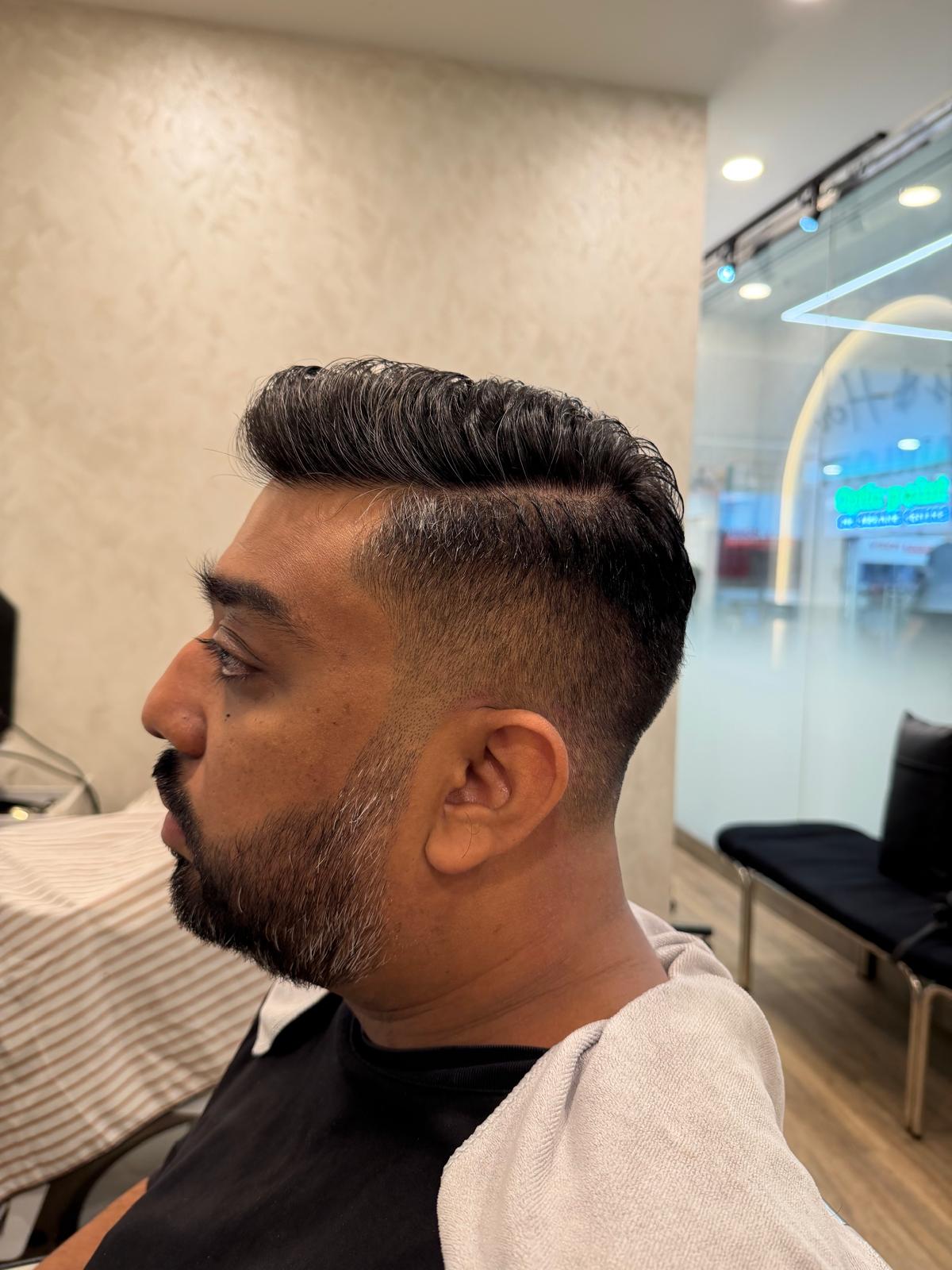
For maintenance, bring a photo of your beard at a stage you liked. Show which boundary has become untidy and which lengths should stay. For a restyle, explain the new outline you want: closer under the jaw, fuller towards the chin or a softer transition into the neck. This avoids a maintenance appointment becoming an unexpectedly short beard.
If you are growing the beard, say so before any lining work. Hair beneath the chin may contribute to the fuller shape you are building. Removing that area too enthusiastically can change the profile, even if the front looks neat. Hairloft lists beard grooming alongside cuts on its barber services page; mention whether you want a tidy or a redesign when booking.
Do not rely on a finger-width rule alone
Online rules about placing the line a set number of fingers above a landmark can be a starting illustration, but they do not account for every neck, jaw or beard length. Ask the barber to show the proposed boundary before removing hair. Look at it with your head in a comfortable, level position as well as slightly raised for access.
A line judged only with your chin stretched upwards can look different when you lower your head. Also check how the boundary curves towards each ear. The centre point alone does not explain the complete outline. Use a mirror to confirm the side views rather than trying to judge everything by touch.
Choose the finish you will maintain
A crisp boundary and a softly blended transition are different preferences. A sharp line makes the edge more visible as surrounding hair returns. A softer transition may suit someone who prefers less contrast. Neither is automatically the correct choice; discuss how much at-home upkeep you actually want to do.
Also clarify whether the skin below the beard should be closely shaved or simply tidied with a trimmer. These are separate decisions from the position of the line. Describe any product or shaving method you already know you dislike, without assuming a particular finish is included in every booking.
Use a four-part consultation brief
- Shape: “I want to keep the fullness under my chin.”
- Boundary: “Please show me the neckline before taking it higher.”
- Finish: “I prefer a softer transition rather than a very sharp edge.”
- Maintenance: “At home I only want to clear obvious stray hairs.”
These are sample phrases you can adapt. If you wear a shirt collar regularly, mention whether the beard catches against it. If your moustache needs attention too, identify that separately instead of assuming “beard tidy” means shortening every area equally.
Keep a reference for the next visit
After the appointment, take a front photo and one from each side in similar lighting, with your head level. Keep them with a short note about what you liked. That record is more useful than remembering a trimmer setting without knowing which direction or section it was used on.
At home, avoid repeatedly moving the boundary higher to chase one stray hair. Pause and check the whole shape before removing more. If you are uncertain, leave the area for the next appointment. To discuss a neckline that works with your current beard length, contact His & Her Hairloft with a clear current photo and your preferred outline.