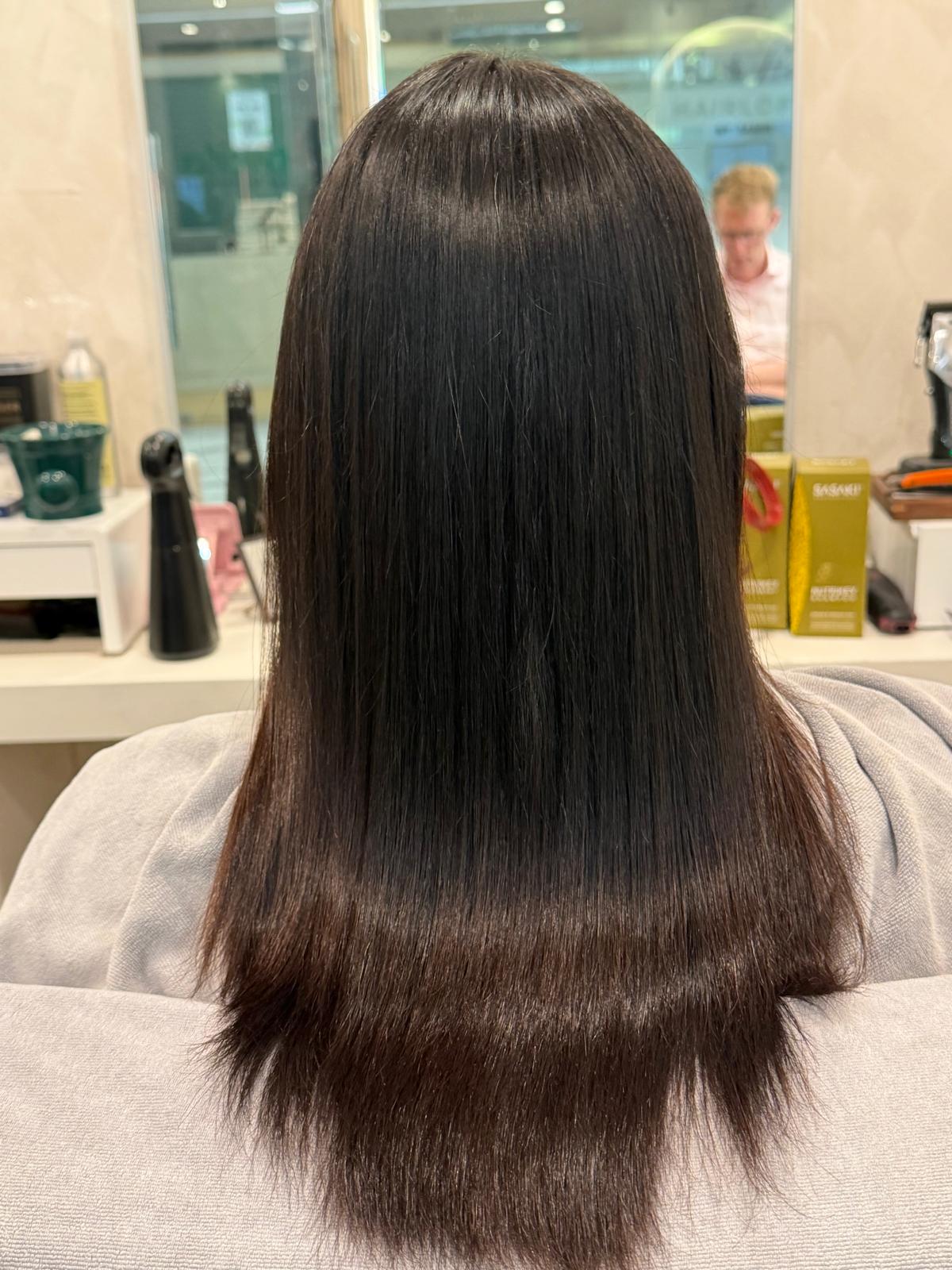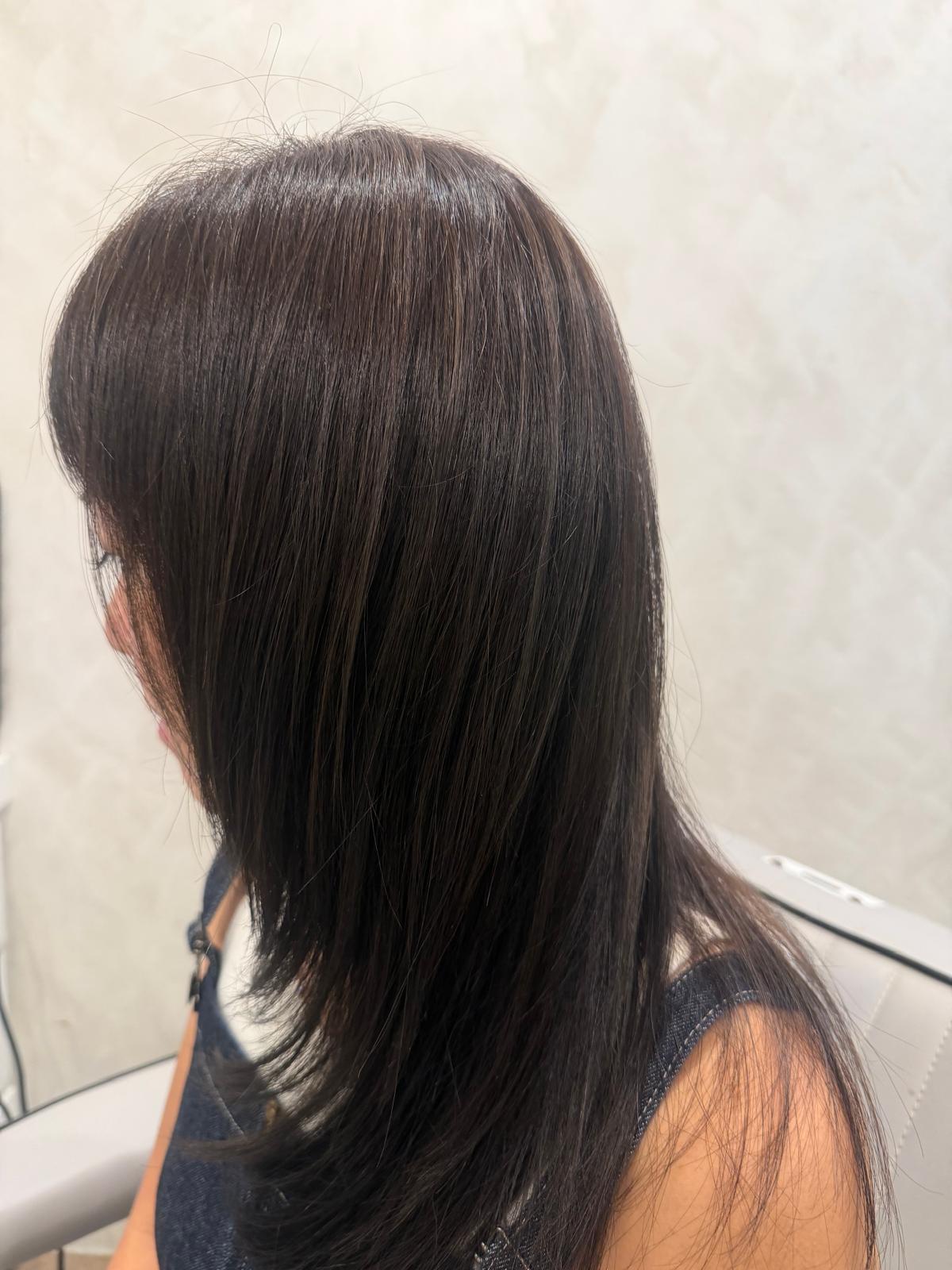
Changing Your Hair Parting: A Small Styling Experiment Before a Cut
A different parting can change how your front sections sit without immediately changing the haircut. It is a useful experiment when you want a small refresh, are growing out a fringe, or cannot decide whether a reference image appeals because of its cut or its styling.
Try the change with modest expectations. A new parting does not guarantee extra volume or permanently retrain the way your hair lies. The aim is to see whether you like the arrangement and whether it is easy enough to repeat.
Move it a little before moving it a lot
If you normally part well to one side, try shifting it slightly first. Compare that with a centre part and a position between the two. A small change may give you the balance you want without moving every front section into an unfamiliar position.
Use your normal styling method and compare like with like. A new parting finished with a careful blow-dry is difficult to judge against your usual parting left to dry on its own. Keep the routine similar so you are evaluating the arrangement itself.
Look beyond the front-facing photograph
Check the side views and the back of the crown. Then put on your glasses, tuck your hair behind your ears and gather it as you normally would. A parting you like when everything is loose may expose a shorter section when the hair is tied.
Notice how often you touch or rearrange it over a normal morning. If one version looks appealing but needs constant attention, decide whether that effort fits your routine. It may be an occasional look rather than your everyday choice.
Use a short comparison note
| What to compare | What to note |
|---|---|
| Front sections | Where they finish and whether they fall into your eyes |
| Glasses and ear tucking | Which arrangement feels most comfortable |
| Tied-up hair | Which pieces stay gathered or need a clip |
| Daily effort | How much arranging the parting needs |
Take a photo of the version you prefer and one of the difficulty you noticed. Specific observations give the stylist something useful to assess; a request for “more flattering hair” leaves much more open to interpretation.
Tell your stylist before the cut begins
If you intend to adopt a new parting, demonstrate it before discussing a fringe, face framing or a shorter shape. Explain whether you also want the option to switch back. Those are different briefs: a cut you wear consistently in one arrangement and one you expect to move between several.
Avoid trimming an awkward section yourself during the experiment. Something that looks long when moved across the head may have a different role in your usual parting. Ask the stylist to show the effect of a proposed change in both positions before agreeing.
When comparing photographs, keep your head angle and lighting similar. A head tilt can make one side appear much longer or fuller. You are trying to decide whether you prefer the parting, so give yourself a reasonably consistent view of each version.
Choose the amount of commitment you want
You might decide to keep the current cut and use the new parting only for evenings. You might prefer a small front adjustment to make it easier day to day. Or the experiment may show that you already like your usual parting and want a different kind of change.
Any of those is a useful result. The experiment has helped define the brief before a more lasting decision. If you book styling, ask to see how the parting is placed and finished so that you can judge the process as well as the appearance.
Browse Hairloft’s cuts and styling options. Contact the salon with your preferred look and explain whether you want a temporary styling change or an adjustment to the cut.