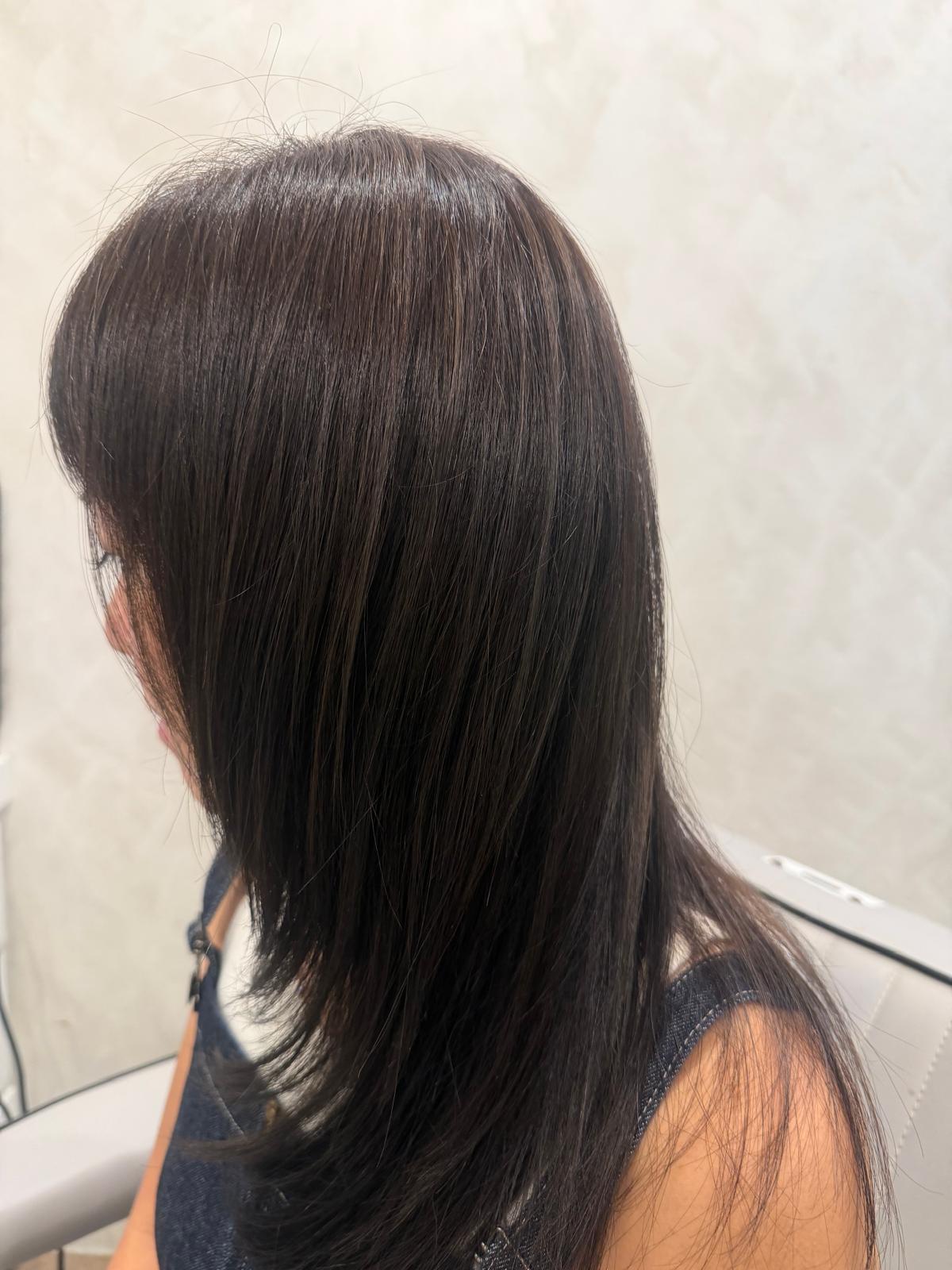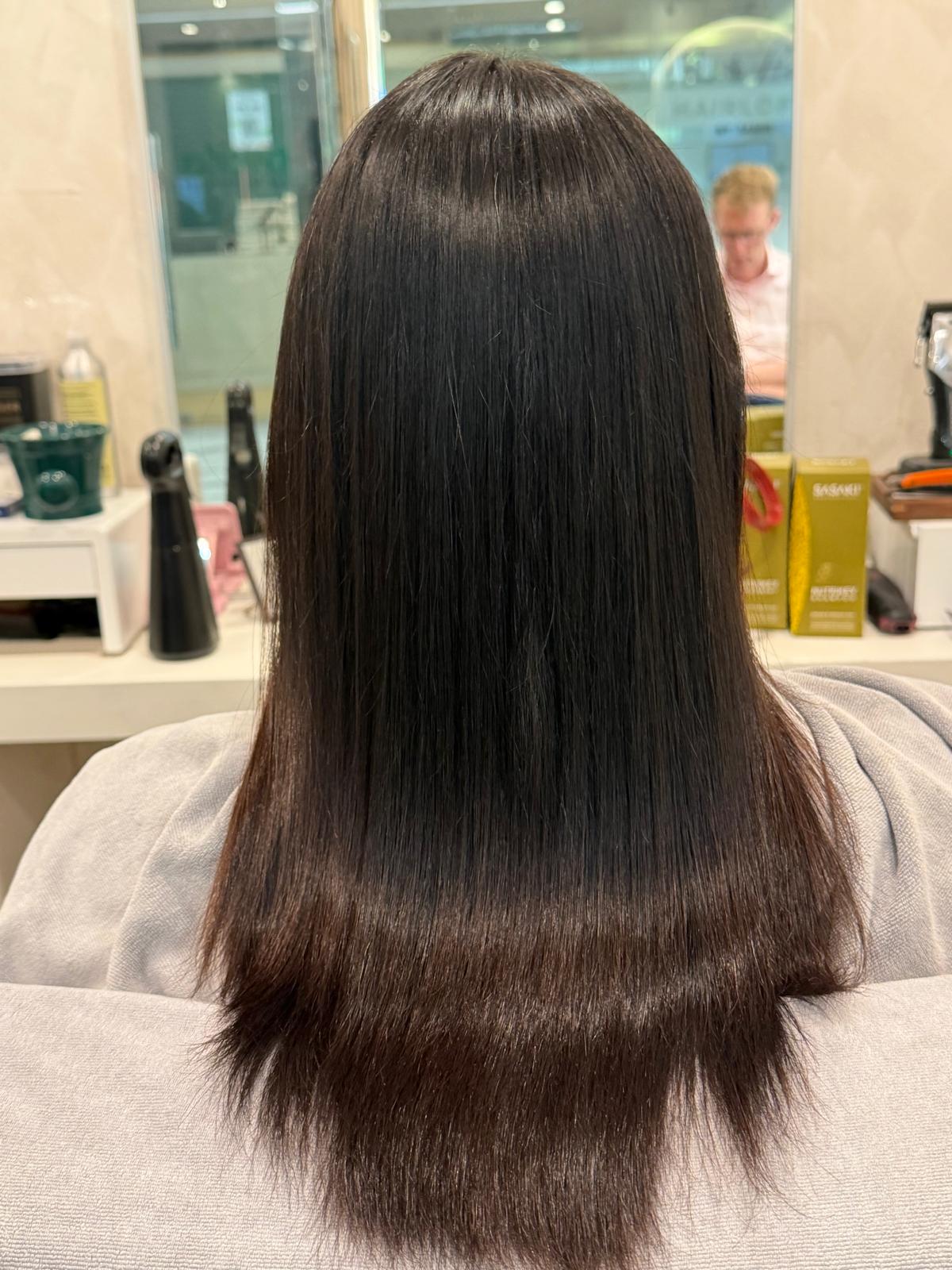
Your Colour History and a Strand Test: What to Discuss First
“I last coloured my hair a few months ago” is a useful starting point, but it may leave out older colour still present in the lengths. Before a significant change, especially one involving lightening, give the stylist a clear picture of what has happened to the hair that remains on your head. You do not need technical expertise or a perfect memory to make that history helpful.
Think in sections, not just in dates
The newest roots may be untreated while the middle and ends have experienced several services. A recent root touch-up does not describe the history of those older sections. Make a simple sketch or use a photograph to show which areas were coloured, highlighted, straightened or permed, if you remember.
Include salon services, home dye, colour-depositing products and anything you used to change the appearance of grey. Mention henna or an unfamiliar product even if you considered it natural. If you do not know what was used, say so and bring the packaging, an old receipt or the name you remember. Uncertainty is useful information.
Build a short history without guessing
- List the most recent services and their approximate dates.
- Mark whether colour was applied to roots, selected sections or the full length.
- Include previous lightening, even if you later coloured over it.
- Note major haircuts that removed older treated lengths.
- Describe what you have noticed, such as uneven colour or ends that feel different.
Keep observations separate from conclusions. “The ends tangle more than the roots” is more useful than deciding for yourself that a particular treatment has permanently repaired or damaged them. The stylist needs to assess your current hair, not simply inherit a diagnosis from your notes.
Understand the question a strand test can help answer
A strand test looks at how a small sample of hair responds to a proposed colour process. Wella’s colour testing guidance distinguishes a strand test from the separate allergy test described in product instructions. A good colour result on a strand is not an allergy-test result. Ask the salon which assessments and advance arrangements apply to your proposed service; do not substitute a home experiment for that discussion.
A sample can inform the plan, but it does not promise that every section of your head will behave identically. Your lengths may have different histories. The practical question is what the stylist learns from the assessment and how that affects the options, limitations or timing they recommend.
Prepare for the plan to change
You might arrive hoping for a much lighter colour and learn that a smaller change is more appropriate for now. Before committing, ask what is achievable at this appointment, what remains uncertain and what alternative would still meet your main goal. A decision to pause or change direction is part of an assessment, rather than a reason to demand a stronger process.
For example, your real priority may be making the colour look more even, while your reference photo happens to be much lighter. Tell the stylist which matters more. An even-looking brown and a pale blonde destination are different briefs, and separating them gives the consultation useful flexibility.
Send the relevant details before booking
Hairloft’s colour services page says its consultation considers the current base, condition and previous chemical history. When you contact the salon, mention a major colour change and any history you are unsure about so the team can advise on the appropriate booking arrangements.
Bring the same notes to the appointment, along with current and goal photographs. End the conversation with a clear understanding of the proposed next step, any checks still needed and the result being discussed. A concise, honest history gives the stylist a better starting point than an impressive-sounding but incomplete list of product names.