Growing Out a Short Men's Haircut: What to Trim and What to Leave
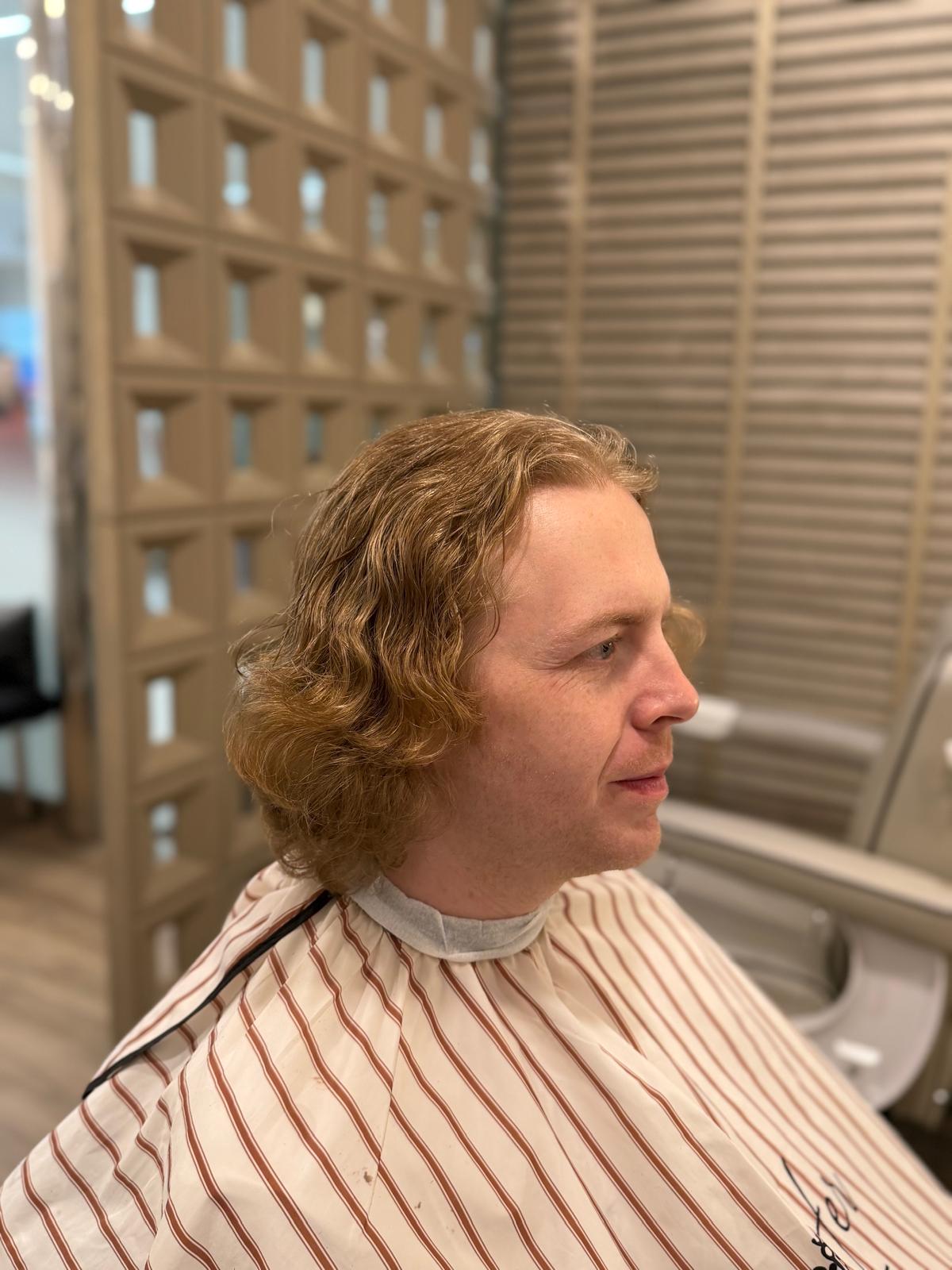
Growing out a short haircut is easier when each trim has a purpose. The problem usually is not that every part is too long: the neckline may look untidy while the top still needs length, or the sides may stick out before they are long enough to tuck back. Asking for your usual haircut can quietly restart the process. Instead, decide which length you are protecting and which outline you want to keep presentable.
Choose the next wearable shape
A distant goal photo is useful, but your next appointment needs a nearer target. If you are moving from a short crop to a swept-back style, the first target might be enough front length to push to the side. If you are leaving an undercut behind, the priority may be letting the disconnected sides catch up. Those two transitions need different decisions.
Choose one feature you want to gain, such as ear coverage, a softer side outline or a fringe that moves away from your forehead. Then identify one feature you can tolerate temporarily. A little width above the ears might be acceptable if removing it would delay your goal. You can review the available cutting services on Hairloft’s men’s barber page before arranging a consultation.
Separate an outline tidy from a full reset
Neckline hairs, uneven edges and an uncomfortable section around the ears may need attention without shortening the whole haircut. Point to each area and ask whether cleaning it will preserve the shape you are growing towards. Avoid using “short back and sides” out of habit when those are the sections you need to grow.
Do not assume all bulk should be removed either. Some weight can help longer sections sit together. Ask the barber to explain where extra width is coming from: the perimeter, an old disconnection, or the way you dry it. The answer determines whether a small adjustment will help or whether patience and styling are the better next step.
Bring a simple keep-and-change brief
- Keep: the length at the front, or another clearly identified section.
- Change: one specific issue, such as an uneven neckline.
- Goal: the next shape you want to wear comfortably.
- Routine: whether you air-dry, use a dryer or wear headgear daily.
- Limit: how much length you are comfortable losing today.
For example: “I want to grow this into a side-swept cut. Please keep the front and crown length. The hair touching my collar bothers me; can we tidy that without taking the sides back to my old length?” This is a sample consultation brief, not a promise that every starting cut can make the same transition.
Make the in-between stage easier at home
Try changing direction before adding more product. Gently dampen the section that has set awkwardly, comb it into the intended position and dry it with a comfortable setting, following your dryer’s instructions. Use a modest amount of a product you already tolerate, spread through your hands before application. A heavier coating can make several lengths look clumped rather than connected.
Take a front and side photo after a normal morning routine. Compare these with your previous photos instead of judging progress only on an unusually difficult day. Record what you could not manage, such as a fringe falling forward during work. That gives the next consultation a practical starting point.
Decide when a trim is useful
A fixed calendar is less useful than the shape you need to maintain. Book when the outline or balance is stopping you wearing the haircut comfortably, and explain that the appointment is part of a grow-out. Trimming should support the transition you have agreed. If you want help deciding the next step, contact His & Her Hairloft with current photos and your target shape.