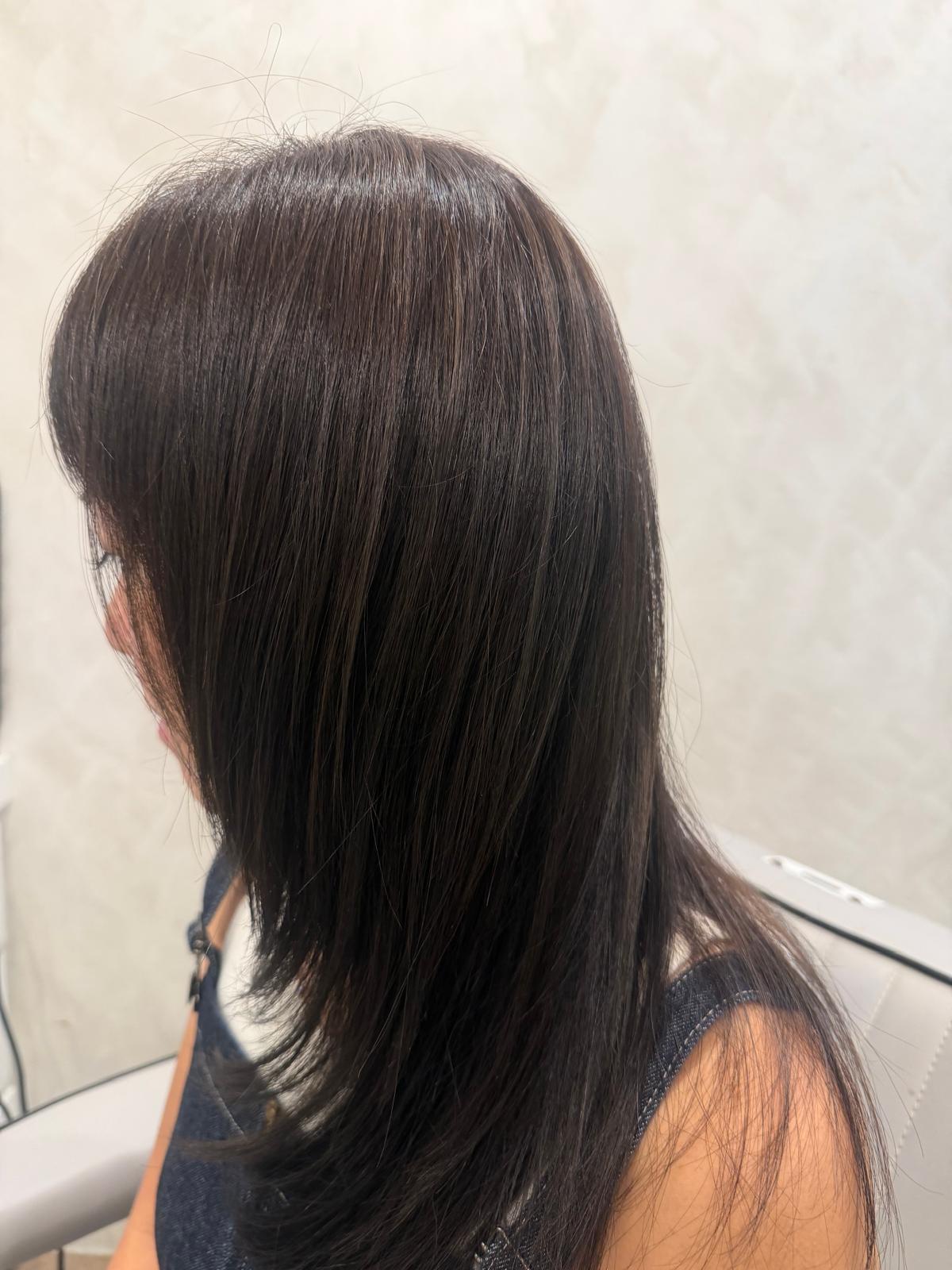
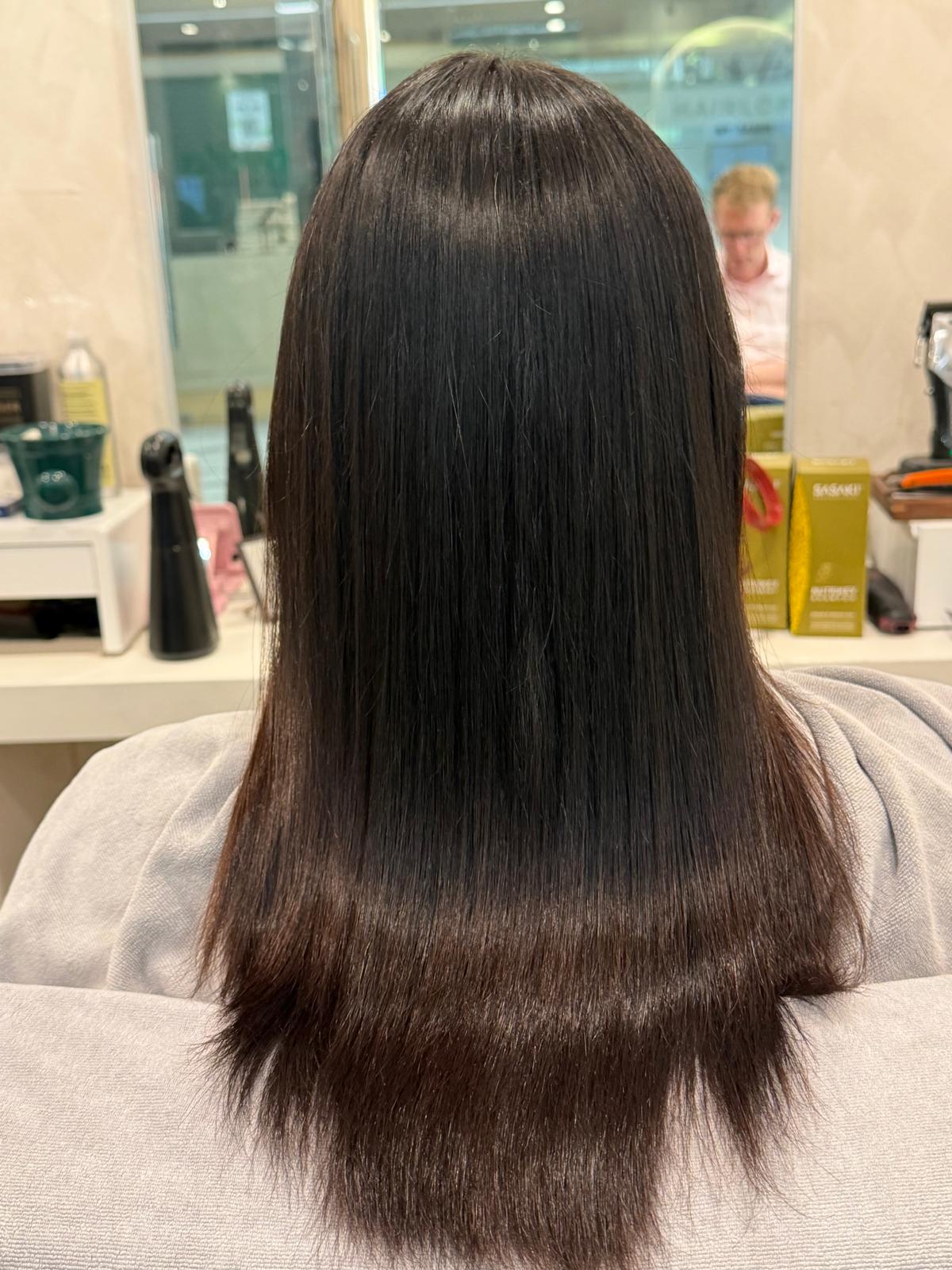
In Singapore, our hair is in a constant battle. The humidity creates a frizzy halo, while chemical services like colouring, bleaching, and perming leave our hair feeling dry, brittle, and damaged. Walking into a salon, you’re faced with a menu of options: Keratin Treatment, Scalp Treatment, Tokio Inkarami, Olaplex… it’s confusing.
Do you need to tame frizz, or do you need to repair damage? Or is the problem your scalp? Choosing the wrong hair treatment in Singapore isn’t just a waste of money—it won’t solve your problem.
This guide will help you diagnose your hair’s true needs, understand the different types of treatments, and find the perfect solution for flawless, healthy hair.
Interactive Matchmaker: Find Your Perfect Hair Treatment
Let’s find out what your hair is *really* asking for. Choose the one statement that describes your biggest hair problem.
What’s Your Main Hair Concern?
The 3 Main Types of Hair Treatments in Singapore (Explained)
As you just discovered, not all treatments are created equal. They fall into three distinct “families.”
The 3 Families of Hair Treatments
Family 1: Smoothing Treatments (For Frizz)
This is the best frizzy hair treatment in Singapore. These treatments work by coating the hair shaft, sealing the cuticle, and blocking out the humidity that causes frizz.
- Keratin Treatment: The most popular choice. It infuses your hair with keratin, dramatically reducing frizz and curl for 2-4 months. Your hair becomes smooth, shiny, and dries much faster.
- Nanoplasty: A newer, often formaldehyde-free alternative that also smooths and straightens hair, using amino acids. It can provide a more “naturally straight” look.
Who needs this: Anyone (with healthy or mildly damaged hair) whose main complaint is puffiness, frizz, and unmanageable waves/curls.
Family 2: Repair Treatments (For Damage)
These treatments fix your hair from the *inside out*. They do not primarily target frizz (though healthy hair is less frizzy). They rebuild the protein bonds broken by bleaching, colouring, and perming.
- Tokio Inkarami: A multi-step salon treatment that replenishes lost keratin and rebuilds hair bonds, restoring strength, elasticity, and shine.
- Olaplex / Bond-Builders: These treatments (often done during a colour service) work on a molecular level to repair broken disulfide bonds, preventing breakage.
Who needs this: Anyone with bleached, frequently coloured, or permed hair. If your hair feels “gummy” when wet, or snaps when dry, this is for you.
Family 3: Scalp Treatments (For Scalp Health)
This is the foundation of all healthy hair. You can’t have beautiful hair if your scalp is congested, oily, or dry. These treatments are like a “facial for your scalp.”
- Deep Cleansing Scalp Treatment: Uses exfoliation (physical or chemical) to remove product buildup, excess oil (sebum), and dead skin cells from your follicles.
- Balancing/Soothing Scalp Treatment: Aims to calm an itchy, flaky, or dry scalp, or to regulate oil production for an oily scalp.
Who needs this: Everyone, on a regular basis. But especially those with oily hair, dandruff, itchiness, or hair loss concerns.
The Big Misconception: Keratin vs. Rebonding
Many people are afraid a Keratin Treatment will give them pin-straight, flat “rebonded” hair. This is a common confusion.
Pro-Tip: Smoothing vs. Straightening
Rebonding (Straight Perm) permanently breaks your hair’s internal bonds and reshapes them to be pin-straight. It grows out with a very obvious line. It is a straightening service.
A Keratin Treatment is a smoothing service. It *coats* the hair to fight frizz. While it does loosen your curl pattern (by up to 50-70%), it does not permanently break the bonds. It wears off gradually over a few months, leaving your natural texture to return, and your hair retains body and movement.
Why a Professional Diagnosis is Key
So, can you just walk in and ask for a Keratin Treatment? You shouldn’t. The biggest mistake is misdiagnosing your own hair.
What if your “frizz” isn’t from humidity at all? What if it’s actually your hair’s cuticle being “blown open” from extreme bleach damage? In that case, a Keratin Treatment might not be the best solution; you might need a Repair Treatment (like Tokio Inkarami) *first* to make your hair healthy enough to even hold a Keratin treatment.
This is why you don’t just need a stylist; you need a hair diagnostician.
Your Hair & Scalp Specialists: His and Her Hairloft
This is where a specialist hair salon in Singapore makes all the difference. At His and Her Hairloft Singapore, the consultation is the most important step.
Their experienced stylists don’t just “sell” you a treatment. They will:
- Analyse Your Hair: They’ll check its elasticity, porosity, and damage level.
- Analyse Your Scalp: They can (often with a scope) check for oil buildup or dryness.
- Create a Custom Plan: They might recommend a Scalp Treatment to clear your follicles, followed by a Tokio Inkarami treatment to repair your damage, and *then* ask you to come back in 2 weeks for a Keratin Treatment to fight frizz.
They are experts in the full suite of modern solutions and will create a long-term plan to get your hair to its absolute best condition, starting from the roots.
Frequently Asked Questions
How long does a Keratin Treatment last?
A good quality Keratin Treatment typically lasts between 2 to 4 months. This depends heavily on your aftercare. To make it last, you MUST use a sulphate-free shampoo and conditioner, as sulphates will strip the keratin coating from your hair very quickly.
Can I get a hair treatment on the same day as my colour service?
Yes! In fact, it’s highly recommended. A Repair Treatment (like Tokio Inkarami or Olaplex) is often performed *during* or immediately *after* a colour service to repair bonds and seal in the colour. However, most stylists advise waiting 1-2 weeks *after* colouring to get a Keratin Treatment, as the keratin process can sometimes slightly lift or alter a fresh colour.
What’s the difference between a cheap treatment and an expensive one?
The difference is in the quality of ingredients and the technology. A cheap, $80 “keratin” might just be a silicone-heavy conditioning mask that washes out in a week. A premium, $300+ treatment (like Tokio Inkarami) uses patented, multi-step technology and high-quality ingredients (like Fullerene) to repair the hair from the inside. You are paying for real, lasting results, not a temporary cosmetic coating.
How often do I *really* need a scalp treatment?
Most professionals recommend a deep-cleansing scalp treatment in Singapore once every 4 to 6 weeks. This aligns with your skin’s natural cell turnover cycle. Think of it like a monthly facial—it’s essential maintenance to keep your scalp clean, balanced, and free of the buildup that can lead to oiliness and even hair loss in our humid climate.