Choosing Men's Fringe Length Around Your Morning Routine
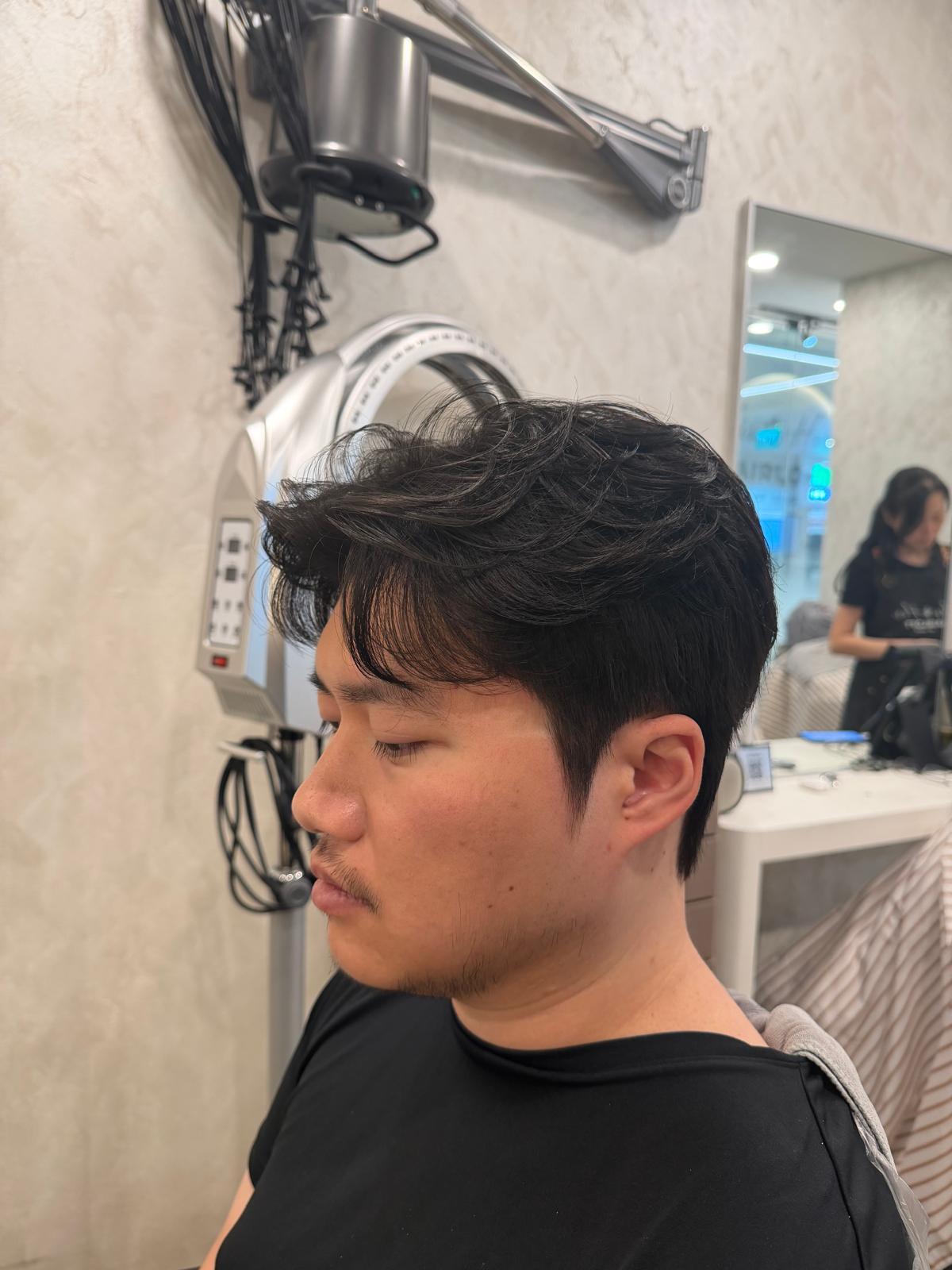
A fringe can look right after a haircut and still feel wrong every morning. The missing detail is often the direction you intend to wear it. Hair falling forward, sweeping sideways and lifting off the forehead may need different lengths and preparation. Decide how you want the fringe to behave before asking for a particular number of centimetres to be removed.
Choose the default position
Start with the position you want on a normal workday. A forward fringe prioritises where the ends fall when they settle naturally. A side sweep needs enough useful length to travel across the forehead. A lifted front depends on the shape at the roots and the way you dry it, not only the amount left on top.
It is reasonable to want more than one look, but name the priority. If your first choice is an easy forward fringe and an occasional lifted style is a bonus, say so. Otherwise, the cut may be built around a styled reference that you rarely intend to wear. You can discuss these choices through Hairloft’s men’s haircut services.
Judge the length in its normal dry shape
Hair pulled straight between fingers does not necessarily show where the fringe will sit when released. A bend, wave or growth pattern can change its resting position. Ask to discuss the intended dry result before cutting and check it again after drying. Use a visible landmark such as above the brows, rather than relying on “shorter” alone.
If you do not like hair touching your forehead, be explicit. Some reference photos hide the fact that a style needs constant sweeping aside. Conversely, if you want forehead coverage, do not ask for heavy thinning without understanding how that affects the fringe’s appearance. Length, weight and direction should be considered together.
Match the brief to the tools you use
| Your usual routine | Useful discussion |
|---|---|
| Air-dry and leave | Where the fringe settles without being pulled or lifted. |
| Brief dryer use | One repeatable direction and the hand or brush movement needed. |
| Regular styled finish | How much front length supports the shape and how to distribute product. |
| Frequent cap or helmet wear | Whether the fringe can be reset after being pressed down. |
These are consultation prompts, not rules prescribing a haircut. Your present length and growth direction still matter. A useful barber brief includes your available time, your preferred position and any part of the routine you know you will skip.
Test the fringe before the final product
Ask to see the front with a light finish first. Move it gently in the direction you normally use, then release it. Look straight ahead with your forehead relaxed. Raising your eyebrows or tilting your head back can make the fringe seem shorter than it will appear in everyday use.
If the centre feels heavy but the corners sit well, point to the centre rather than asking for the whole fringe to be shorter. If only one side splits, show where it separates. Small, specific observations help preserve the parts you already like. A second photo showing what you do not want can clarify the difference.
Plan for the next few weeks of wear
Think about the first sign that the fringe will bother you: touching the brows, blocking your view or refusing to sweep across. Discuss that threshold instead of demanding that the cut last a fixed number of weeks. There is a trade-off between today’s preferred length and how much change you will tolerate as it grows.
For your next visit, save one front-facing reference, note your usual styling time and contact Hairloft. A brief such as “forward most days, above the brows when dry, and only a quick dryer routine” gives the appointment a clear practical goal.