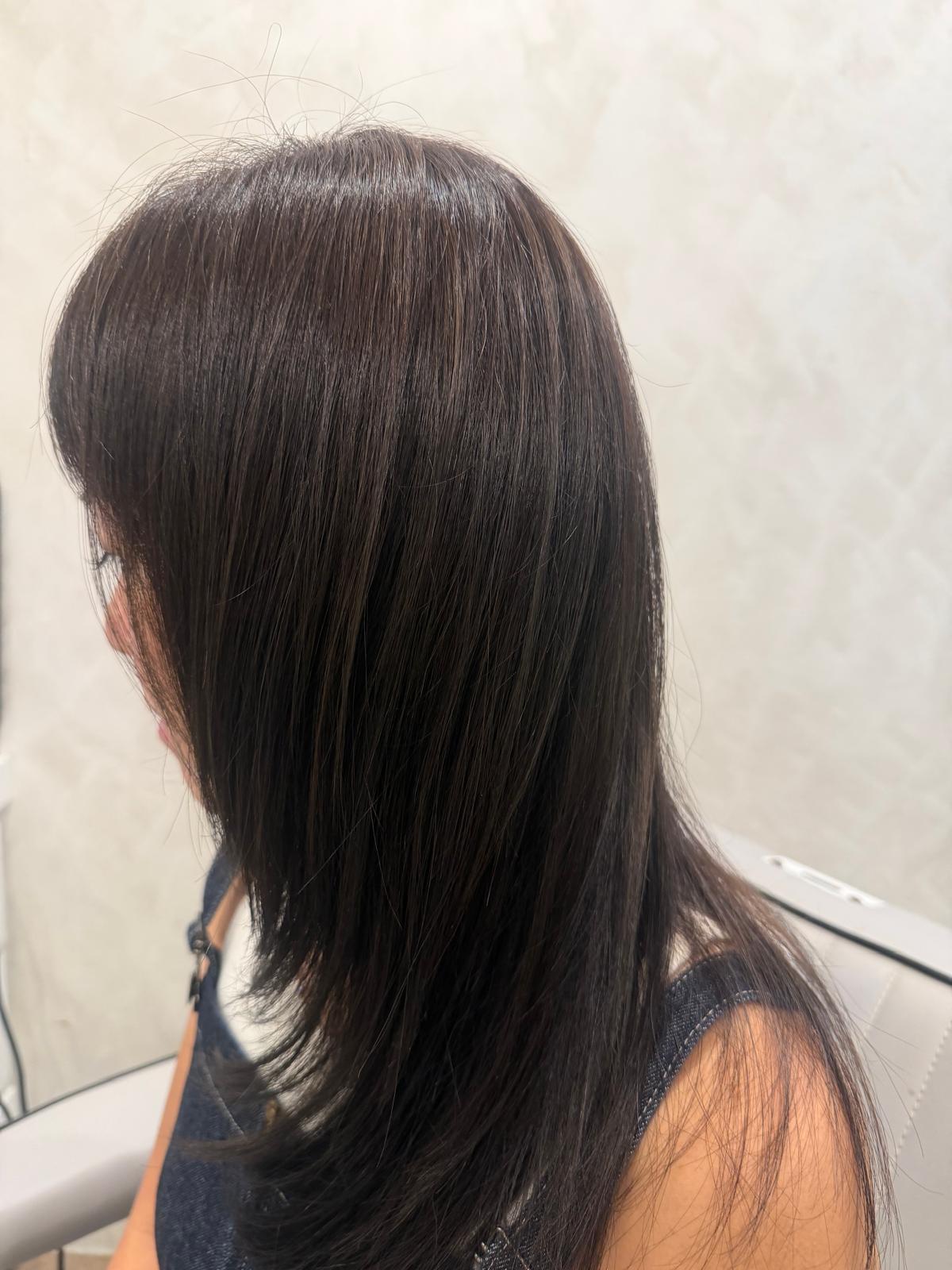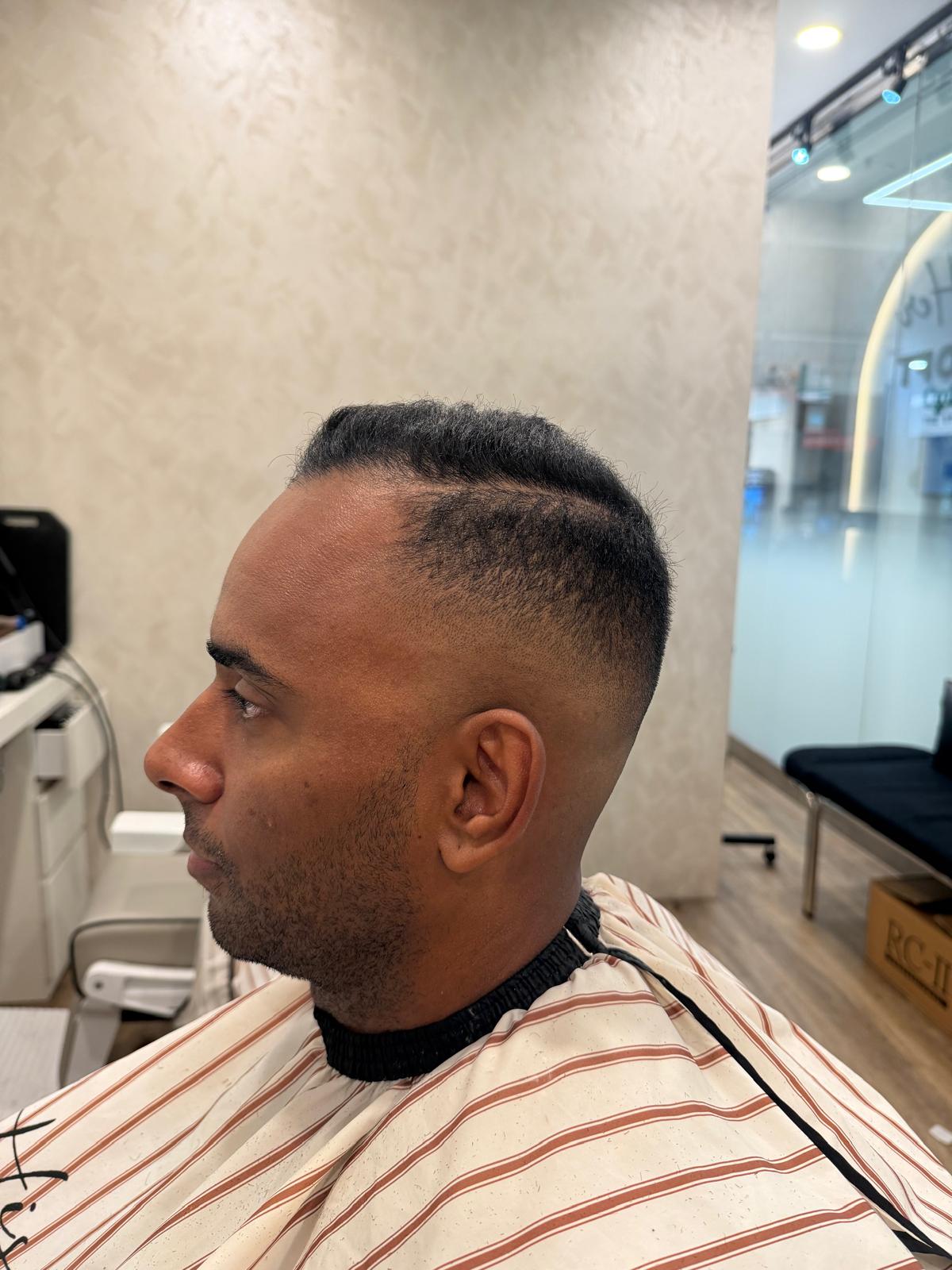
Which Way Should You Part Your Hair? A Men's Styling Test
The side you have always parted your hair on may work well, but habit is not the only option. Changing direction can alter how the front lifts, how the sides sit and how much effort the style needs. Before requesting a hard part or a strongly directional cut, try a simple comparison with clean, lightly damp hair and the routine you normally use.
Observe where your hair settles first
Gently comb the hair back, release it and look at how it starts to divide. Check the front and crown separately. They may not point in exactly the same direction. Do not force a perfectly straight line immediately; the natural movement gives you a starting point for a parting that is easy to reproduce.
A temporary bend from sleeping or wearing a cap can confuse this observation. Try after your normal wash and let the roots settle without strong styling product. You are looking for practical behaviour, not a rule that the hair must always follow. If one section is difficult to interpret, take a photo for the barber instead of repeatedly flattening it.
Compare both directions on separate attempts
Style the hair to one side using a light finish and take a front and side photo. On another ordinary day, try the opposite direction with a similar amount of product and a similar drying routine. Record which side needs more work, whether the front falls into your eyes and how the crown looks once you stop adjusting it.
The comparison is most useful when the conditions are reasonably similar. A carefully blow-dried attempt on one side and a rushed air-dried attempt on the other do not tell you much about direction alone. You can also try a loose part without a sharply visible line if both sides feel overly formal.
Check four practical details
- Front movement: Does the fringe travel where you want, or keep crossing back?
- Crown: Does the back settle, or does the new direction create an awkward lift?
- Side outline: Does one side become heavier when the top is moved over it?
- Repeatability: Can you reproduce the result in your usual morning time?
Choose based on the whole haircut, not only the most flattering front photo. Put on your glasses if you wear them and check the side view too. A part that looks balanced in the mirror can still leave a section catching against the frame or needing frequent attention.
Distinguish a combed part from a cut-in line
A combed part is a styling choice that can be moved as the haircut allows. A hard part is a defined line cut into the hair, so its placement is less flexible until it grows out. If you are still testing directions, explain that before asking for a very defined line. You do not need to commit to one just to make the part visible.
Also ask how the top and sides support your chosen direction. A haircut built to carry length to one side may feel different when you reverse it. Hairloft’s men’s haircut and styling services provide a place to discuss the direction and the underlying shape together.
Turn the test into a clear consultation request
Bring the two comparison photos and say which result felt easier, not only which looked best in the first minute. For example: “The left part stays out of my eyes, but the crown lifts. I prefer a loose line and do not want a shaved part.” This gives the barber both your preference and the unresolved detail.
Ask for a demonstration using the dryer, comb or hands you actually use at home. A comfortable direction is one you can repeat. To explore a different parting without guessing at the cut, contact Hairloft and share your current length and preferred finish.