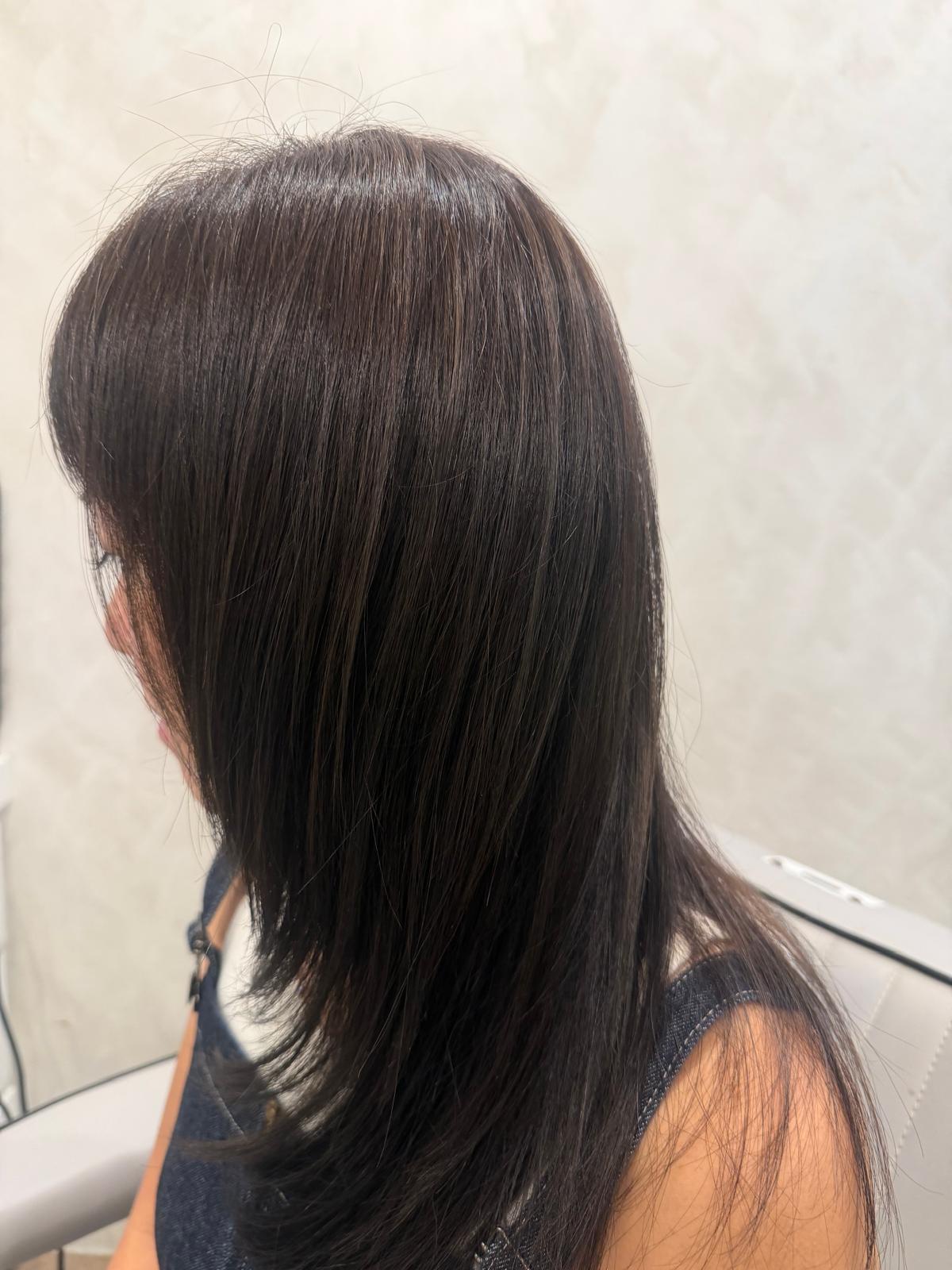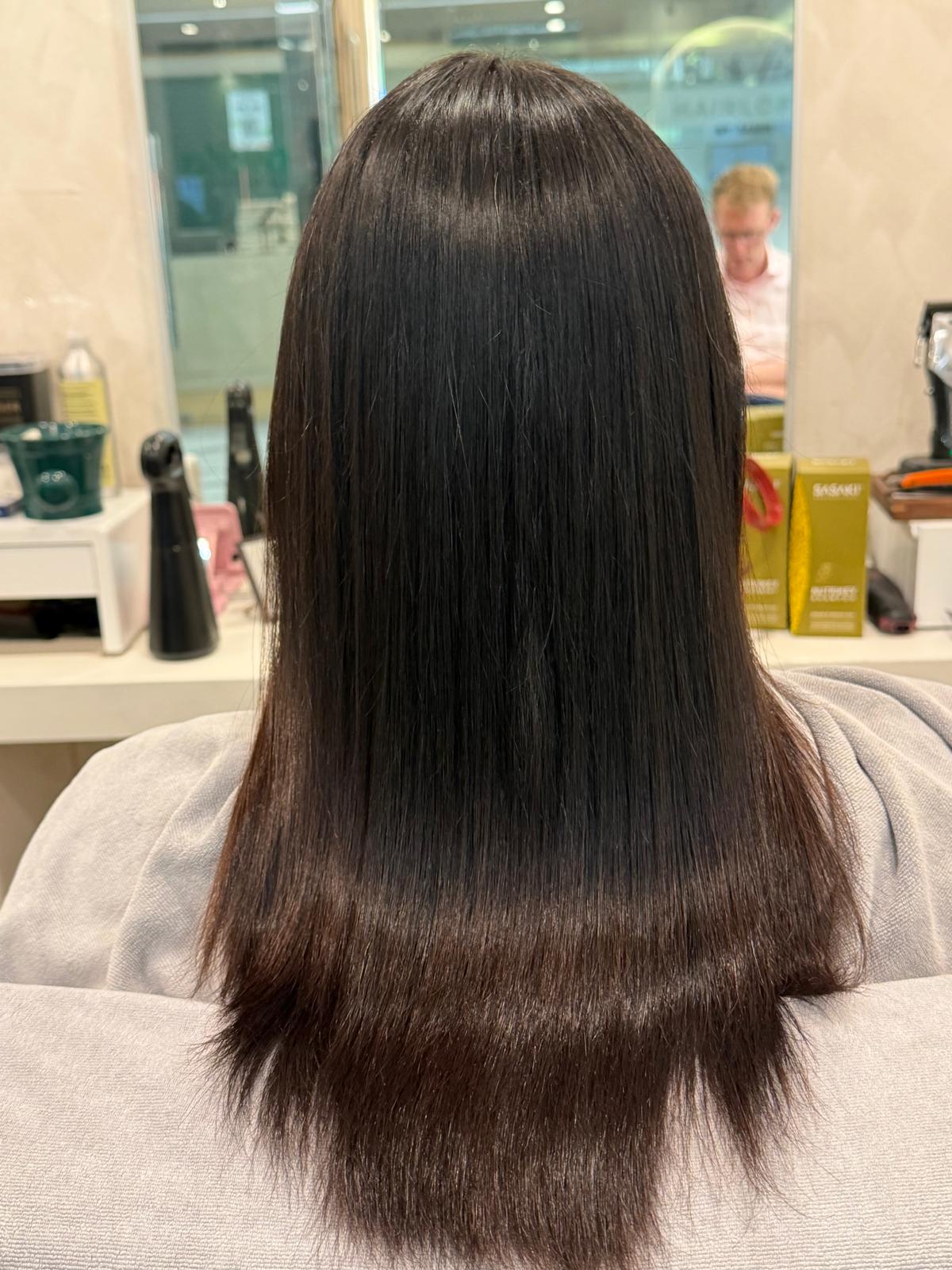
If you are a few months into motherhood and suddenly finding clumps of hair in the shower drain, on your pillow and wound around your fingers, please take a breath. You are not going bald. What you are most likely experiencing is postpartum hair loss, and in Singapore it is one of the most common concerns new mums bring to us. It looks alarming, but for the vast majority of women it is a normal, temporary phase.
This guide explains why postpartum hair loss happens, in plain language and without the panic. We will walk through what genuinely helps, how to style the awkward regrowth stage, and the signs that mean you should check in with your doctor. None of this is medical advice, but it should help you feel a lot calmer about what your hair is doing right now.
Table of Contents
Why postpartum hair loss happens
The proper name for this is telogen effluvium, and the simplest way to understand it is to think about what your hair did during pregnancy. Normally, your hair is always in a quiet rotation: some strands grow, some rest, and some shed. During pregnancy, higher hormone levels keep far more hair locked in its growth phase, so you shed much less than usual. That is why so many women remember their pregnancy hair as unusually thick and glossy.
After you give birth, those hormone levels drop quite sharply. All that hair which was politely staying put now enters its shedding phase at roughly the same time. The result is a wave of heavy shedding that usually starts around two to four months after delivery. You are not losing more hair than a normal person loses over many months, it is simply arriving all at once, which is what makes it so dramatic.
It helps to know this is a scalp and hormone story, not a sign that you are doing anything wrong. If you want to understand your scalp better in general, we explain a scalp-first approach to thinning that is useful background reading once the newborn fog lifts.
Is it normal, and how long will it last?
Yes, it is normal, and it is almost always temporary. This is one of the most important things to hold on to during a stage that can feel quite emotional. Your hormones are recalibrating, your body has been through something enormous, and your hair is simply catching up. It is not a reflection of your health failing or your nutrition being poor.
For most women, the heavy shedding settles within about six to twelve months after it begins. You will usually notice the worst of it for a couple of months, then a gradual easing rather than a sudden stop. By your baby’s first birthday, many mums find their hair has largely returned to its old rhythm, often with a fringe of shorter regrowth framing the hairline.
A few things are worth keeping in perspective:
- The shedding looks worse on longer hair simply because each strand is bigger and more visible.
- It is normal for the regrowth to feel finer at first; it usually thickens as it matures.
- Stress and sleep deprivation, which every new parent knows well, can make shedding feel more drawn out.
- It will not leave you with bald patches; postpartum shedding is diffuse, meaning it thins evenly rather than in spots.
What genuinely helps with postpartum hair loss in Singapore
There is no magic product that stops postpartum hair loss, because the trigger is hormonal and time is the real cure. What you can do is support your scalp and protect your fragile regrowth so that when the new hair comes through, it comes through healthy. In Singapore’s humidity, gentle care also keeps the scalp comfortable while everything resets.
Here is what we actually recommend to new mums:
- Be gentle with your scalp. Wash regularly to keep the scalp clean and balanced, but skip harsh scrubbing. A calm, healthy scalp is the best foundation for regrowth.
- Eat as well as the newborn chaos allows. A balanced diet with enough protein, iron and overall nourishment supports hair growth. You do not need exotic supplements, just steady, real meals.
- Do not over-tighten or over-style. Tight ponytails, buns and constant heat tug at delicate new hair. Loose styles protect it.
- Consider a volumising cut. The right shape and a few layers make thinner hair look fuller instantly, which can be a real morale boost.
- Look into supportive salon scalp treatments. Professional treatments will not change your hormones, but they keep the scalp in good condition so regrowth has the best possible environment.
If you want a deeper routine to follow, our guide to scalp care for hair loss and thinning is a practical companion, and these tips to prevent hair loss are gentle enough to fold into even the busiest days.
Styling the awkward baby hair regrowth stage
Once the shedding eases, you enter the stage many mums find oddly more frustrating than the shedding itself: the regrowth. You will likely see a halo of short, wispy hairs standing up along your hairline and parting. These baby hairs are completely healthy, they are just at a much earlier point in the growth cycle than the rest of your hair. The goal now is to work with them, not fight them.
Practical ways to manage regrowth
A side parting often hides regrowth better than a centre parting, because it lays the short hairs down rather than letting them spike upward. A light styling cream or a small amount of pomade smoothed over the hairline tames the flyaways without stiff, crunchy hold. Soft headbands and clips are your friends, and they happen to be very practical when you are leaning over a cot all day.
This is also a good time to talk to your stylist about a cut that grows out gracefully. Soft, face-framing layers blend shorter regrowth into your length so the transition is far less obvious. Avoid very blunt, heavy cuts during this phase, as a hard line tends to highlight the difference between new and established hair. A treatment such as a Japanese head spa can also be a genuinely restorative hour for a tired new mum, while keeping the scalp in good shape for regrowth.
When to see a doctor
Postpartum hair loss is usually nothing to worry about, but there are situations where it is wise to get a medical opinion. Your hair can be an early signal of something else going on in your body, and after birth a couple of common issues are worth ruling out. Please treat the points below as a prompt to seek proper care, not as a diagnosis.
Consider speaking to your doctor if:
- The shedding is unusually severe, or is still heavy well beyond the first year.
- You notice distinct bald patches or spots rather than even, all-over thinning.
- You also feel persistently exhausted, low in mood, unusually cold or notice other physical changes.
- Your hair has simply not improved at all after about twelve months.
Issues such as thyroid imbalance or low iron are common after pregnancy, very treatable, and can show up partly as ongoing hair loss. A simple check with your GP can give you real answers and peace of mind. We are stylists, not doctors, so for anything health-related please always consult a medical professional.
When you are ready, we would love to help you feel like yourself again. Whether that is a fresh, volumising cut, a calming scalp treatment, or simply honest advice about your regrowth, you are warmly welcome to book a consultation or visit His & Her Hairloft. There is no pressure here, just a friendly ear and practical help for this very normal chapter of motherhood.
Frequently Asked Questions
When does postpartum hair loss usually start?
It typically begins around two to four months after giving birth, once pregnancy hormone levels have dropped. The shedding can feel sudden and heavy, but this timing is completely normal.
How long does postpartum hair loss last?
For most women it settles within about six to twelve months from when it begins. You will usually see the heaviest shedding for a couple of months, followed by a gradual return to your normal hair rhythm.
Will my hair grow back to how it was before?
In the vast majority of cases, yes. Postpartum hair loss is temporary, and the hair you shed is replaced by new growth. Many mums see their hair return close to its old thickness around their baby’s first birthday.
Can a salon treatment stop postpartum hair loss?
No treatment can stop it, because the cause is hormonal and time is the real solution. However, supportive scalp treatments and a good haircut keep your scalp healthy and your hair looking fuller while everything recovers.
Is it safe to colour or chemically treat my hair while shedding?
Gentle colour is generally fine, but your regrowth is delicate, so go easy on harsh processing and tight styling. It is best to chat with your stylist about the kindest options for your hair during this stage.
When should postpartum hair loss be checked by a doctor?
See a doctor if the shedding is very severe, appears in distinct patches, or has not improved after about a year. This can point to issues like thyroid or iron problems, which are treatable and worth ruling out.