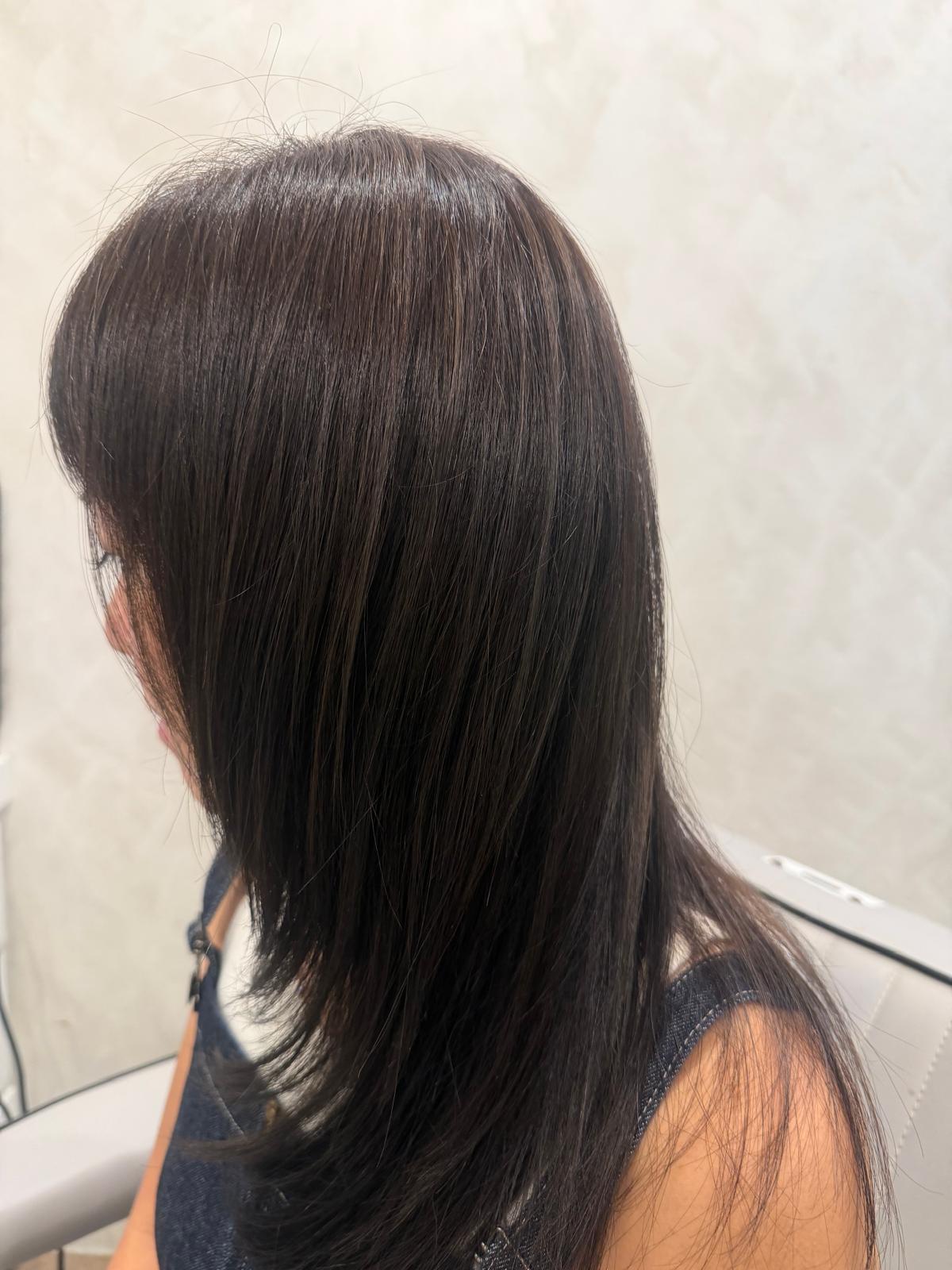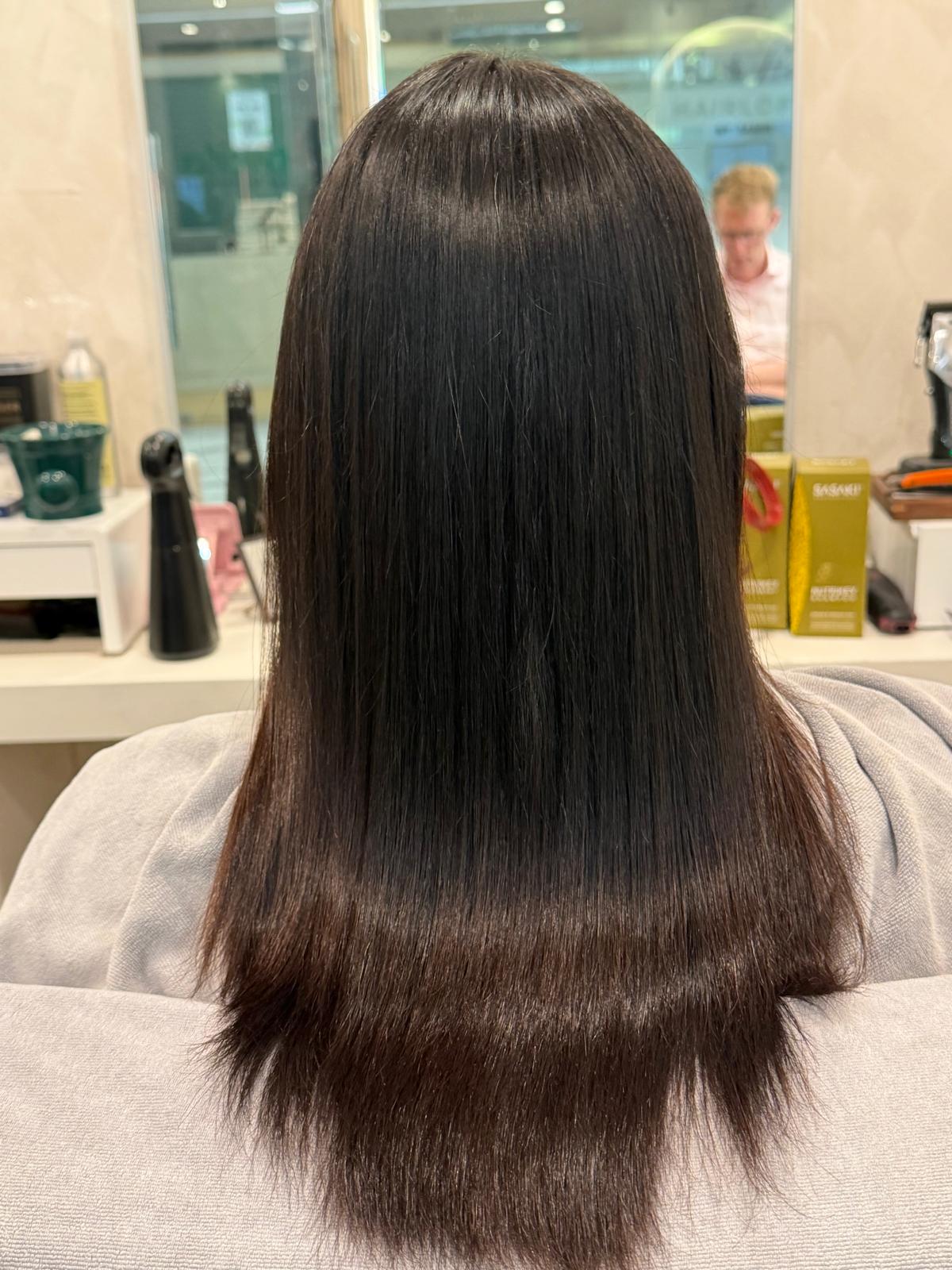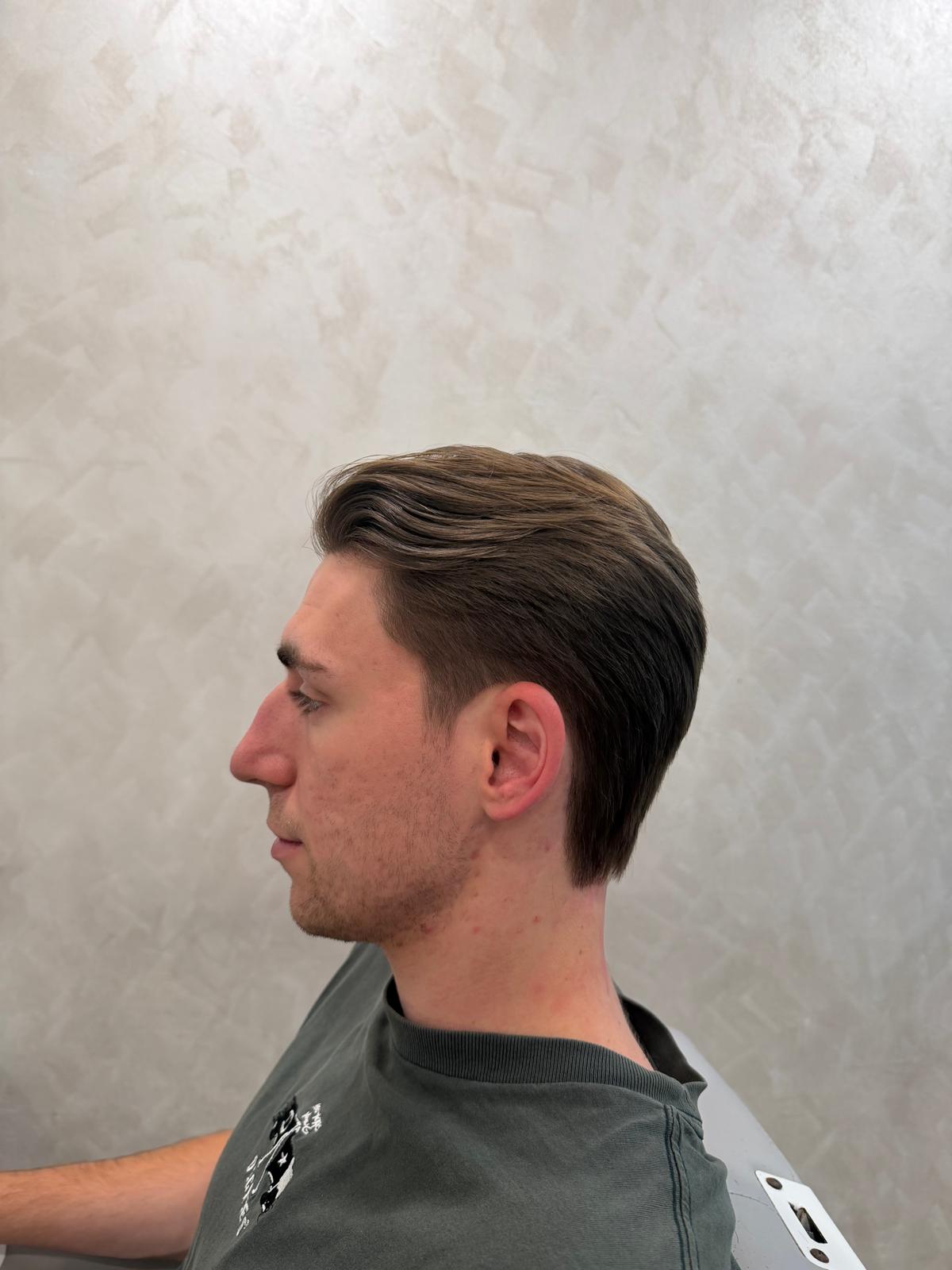
Scissor-over-Comb or Clippers: Choosing the Finish on Your Sides
When someone asks for a “scissor cut,” they may mean longer sides, a softer outline or simply a haircut that does not look freshly shaved. Those are different requests. Scissor-over-comb and clipper work are methods a barber can use to shape hair, and both can form part of one haircut. Choosing the visible finish matters more than insisting on a single tool.
Understand what the two methods describe
In scissor-over-comb work, the comb supports and lifts the hair while scissors cut the hair extending beyond it. Clipper-over-comb also uses the comb to control the cutting line, with clippers doing the cutting. Clippers can additionally be used with guards for selected lengths. The Wahl haircutting guide illustrates both methods. These labels describe how hair is worked, not a guarantee of a particular style.
A short, tidy side can include scissor finishing, and longer sides may include some clipper work around the edges. The useful question is how much hair you want left and how you want it to sit. Hairloft’s barber and grooming page is a starting point for arranging a men’s haircut consultation.
Describe the outline before the technique
Look at the area above your ears in a reference photo. Is there visible movement when the hair is pushed back? Does the scalp show through? Is the outline close to the head, or does it retain some width? Then look behind the ear and at the neckline. You may want more length through the side while keeping those smaller edges clean.
Instead of “scissors only because clippers look harsh,” try: “I want the sides to keep enough length to brush back, with no visible scalp, and a tidy edge around the ears.” Your barber can explain which combination of tools suits that result. If avoiding a particular tool is a personal comfort preference, state that separately.
Compare two practical briefs
| Your priority | What to discuss |
|---|---|
| Soft movement on the sides | Retained length, direction of styling and how the sides connect to the top. |
| A close, compact outline | How much scalp visibility you accept and where the shortest section should sit. |
| A neat grow-out | Which edges can be cleaned while preserving length elsewhere. |
| Minimal morning styling | What the proposed length does when you air-dry your own hair. |
None of these priorities automatically determines a tool. They give the barber a result to work towards. Bring a second photo showing an outline you dislike; it can reveal that the issue is the height of the short section rather than clippers themselves.
Be specific about weight and connection
A heavy ledge between the top and sides can remain even when the edges are neat. Conversely, removing too much weight can leave less material to sweep back. Ask whether you want the top and sides connected smoothly or intentionally separated. Do not use “take out all the bulk” unless you are comfortable discussing the loss of weight and length that may involve.
Show the barber how you push your hair with your own hands. The result should make sense in that direction, not only after a salon blow-dry. If you usually wear glasses, put them on for the final side check because the frame arms can change how the hair sits.
Check the finished shape from more than one angle
Before adding a strong finishing product, ask to see the sides and back. Check the visible length, the area around each ear and the transition into the top. Then ask how to recreate the finish using the tools you actually have at home. If you are deciding between a close cut and retained side length, book a Hairloft consultation and bring photos that show those differences clearly.